20 Pixie Haircut Ideas for Fine Hair That Add Volume
A pixie haircut can make fine hair look fuller, lighter, and easier to style. The right layers remove flat ends while creating movement around the crown, fringe, and sides.
Below are 20 pixie haircuts for fine hair, ranging from soft and feminine to short and edgy. Each idea includes styling advice and details you can discuss with your hairstylist before choosing your next cut.
1. Soft Feathered Pixie
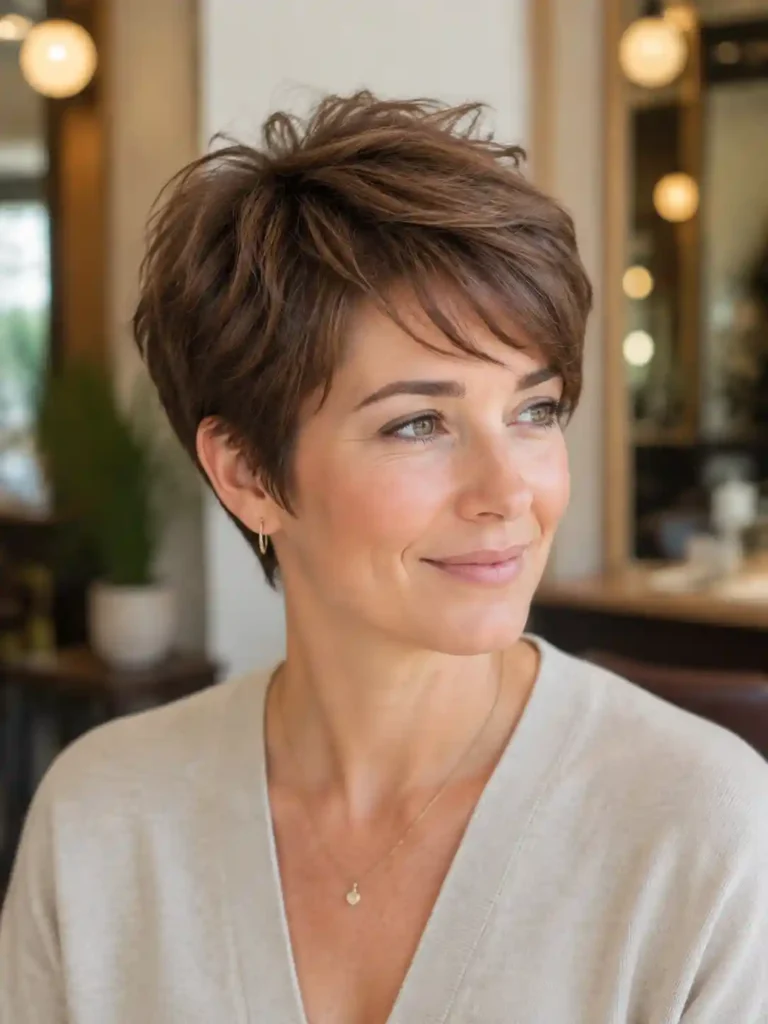
A soft feathered pixie uses light, blended layers to give fine hair natural movement without removing too much density. The longer pieces across the crown can be brushed forward or swept slightly to one side.
This cut works well if you want something short but not severe. A small amount of lightweight styling cream can separate the layers while keeping the finish soft. Avoid heavy wax because it may flatten fine strands.
2. Side-Swept Pixie
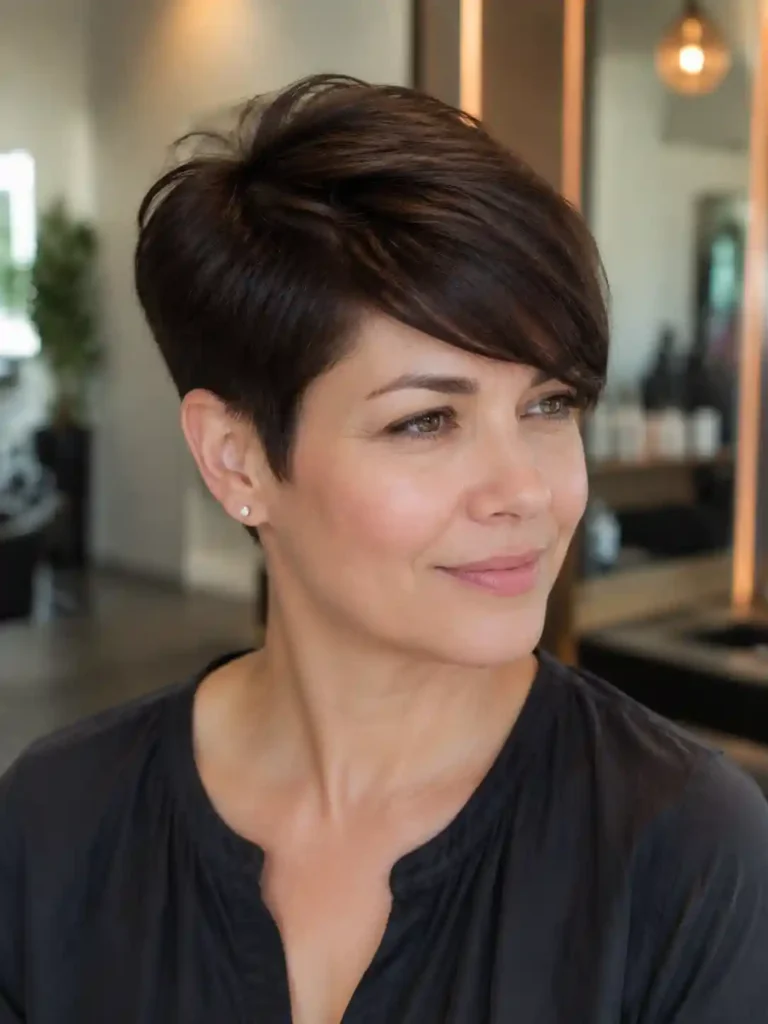
The side-swept pixie keeps extra length around the front, creating a fringe that moves gently across the forehead. The shorter sides and back keep the haircut neat, while the longer top helps fine hair appear fuller.
Ask your stylist to avoid thinning the fringe too much. You need enough hair at the front to create a smooth sweep. Blow-dry it across the head using a small round brush for added lift.
3. Textured Crop Pixie
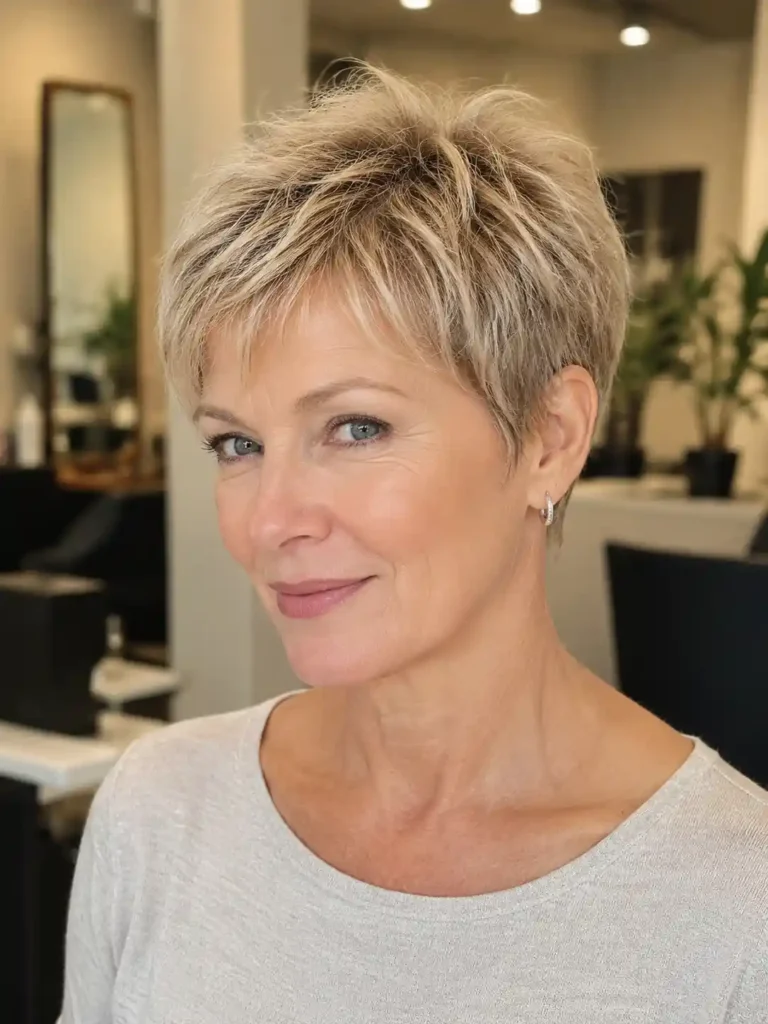
A textured crop pixie has short, piecey layers that create separation throughout the top. This prevents fine hair from sitting flat against the scalp and gives the cut a casual, modern finish.
Use a pea-sized amount of texture paste and apply it mainly to the ends. Gently pinch small sections instead of rubbing the product through your entire head. This keeps the texture visible without making the roots oily or heavy.
4. Wispy Bangs Pixie
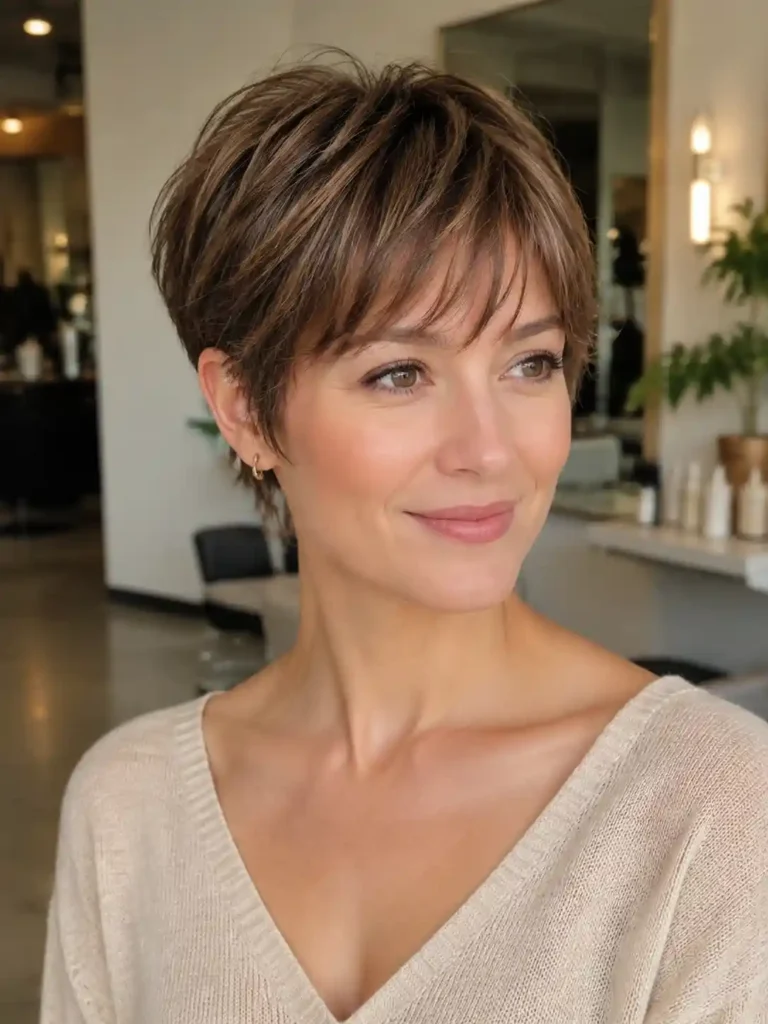
Wispy bangs soften a short pixie and bring attention to the eyes. The light fringe sits gently across the forehead, while the layered crown provides enough height to balance the overall shape.
This style is especially helpful if a blunt fringe feels too heavy for your fine hair. Ask for soft, narrow sections rather than thick bangs. Dry the fringe first, moving it from side to side to prevent unwanted gaps or bends.
5. Platinum Tousled Pixie
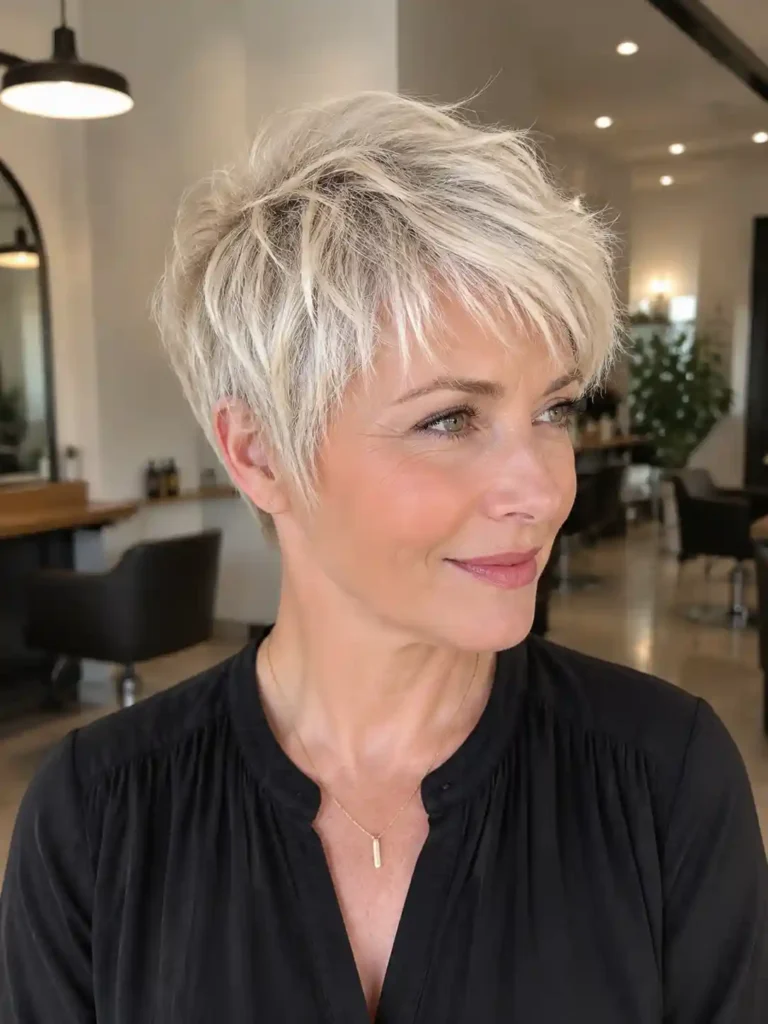
A platinum tousled pixie combines a bright hair color with loose, separated layers. The lighter shade can make individual pieces more noticeable, helping the haircut appear textured and dimensional.
Because lightening may make fine hair feel dry, regular conditioning is necessary. Use a heat protectant before styling and keep hot tools at a low temperature. Finish with a light texture spray, focusing on the crown rather than the roots around your hairline.
6. Curly Pixie
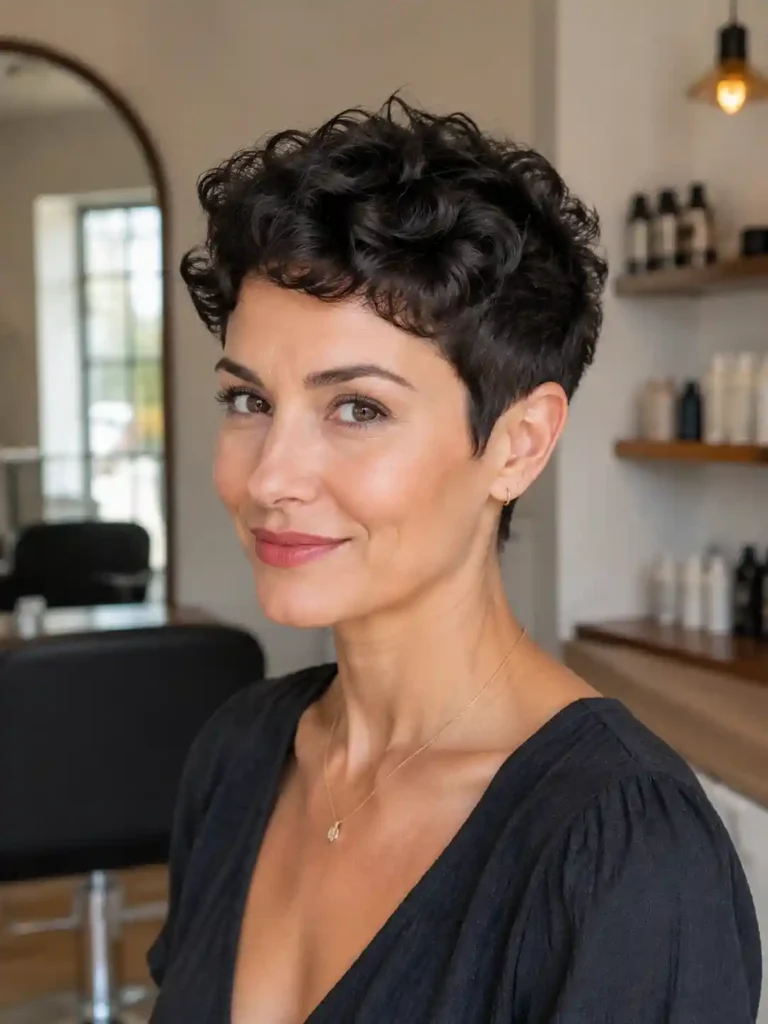
A curly pixie allows natural curls to create body through the top while the shorter sides keep the haircut controlled. Even fine curls can appear fuller when they are cut into a rounded, balanced shape.
Your stylist should cut according to your curl pattern instead of stretching every curl straight. Apply a lightweight curl foam to damp hair and let it air-dry when possible. Avoid touching the curls repeatedly because this can create frizz and weaken their definition.
7. Pixie Bob
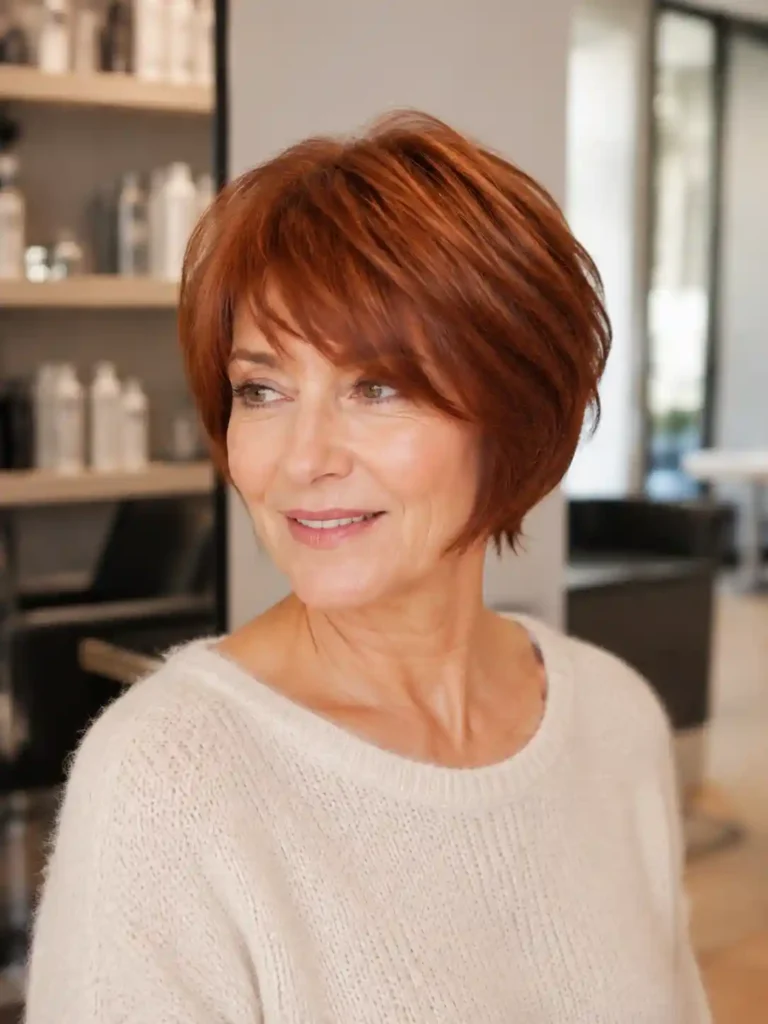
A pixie bob sits between a traditional pixie and a short bob. It normally has a layered back, longer sides, and enough length around the face to offer several styling options.
This is a good starting point if you are nervous about cutting your hair very short. The stacked back can make fine hair look denser, but excessive layering may create thin ends. Ask your stylist to preserve weight around the lower sections.
8. Tapered Silver Pixie
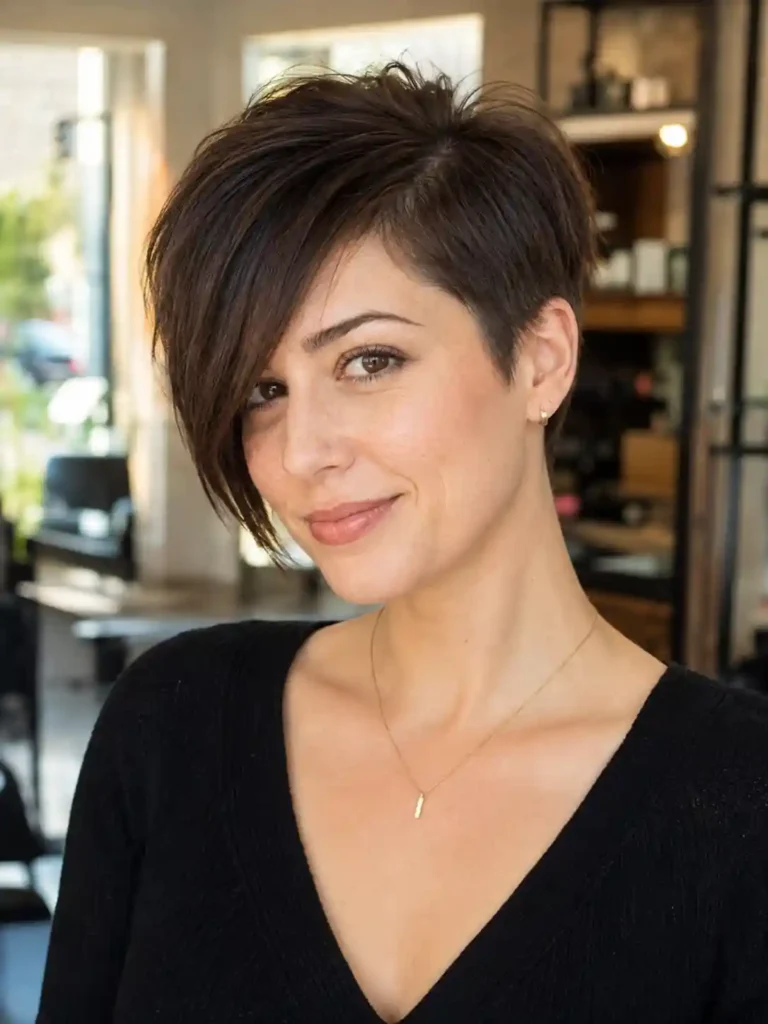
A tapered silver pixie has shorter hair around the ears and nape with slightly longer, airy layers through the top. The clean outline creates a polished shape, while the crown layers keep fine hair from appearing flat.
Silver hair can sometimes become dry or dull, so use a gentle moisturizing shampoo. A purple shampoo may help control yellow tones, but it should not replace your regular cleanser. Style the top with light mousse for flexible volume.
9. Asymmetrical Pixie
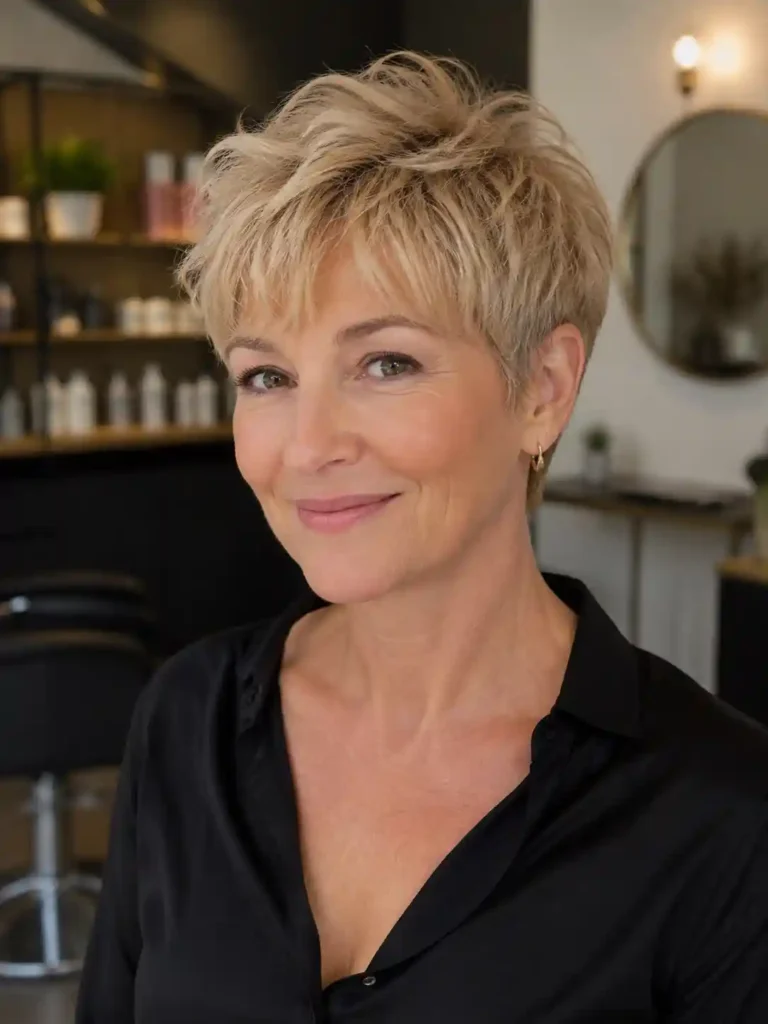
An asymmetrical pixie features a longer section on one side and a shorter, cleaner shape on the other. The uneven length gives fine hair a stronger visual shape and directs attention toward the sweeping fringe.
This haircut can be adjusted to feel subtle or bold. Keep the longest section dense enough to hold its shape. Apply root-lifting spray before blow-drying the fringe across your forehead, then finish with a flexible hairspray that still allows movement.
10. Choppy Blonde Pixie
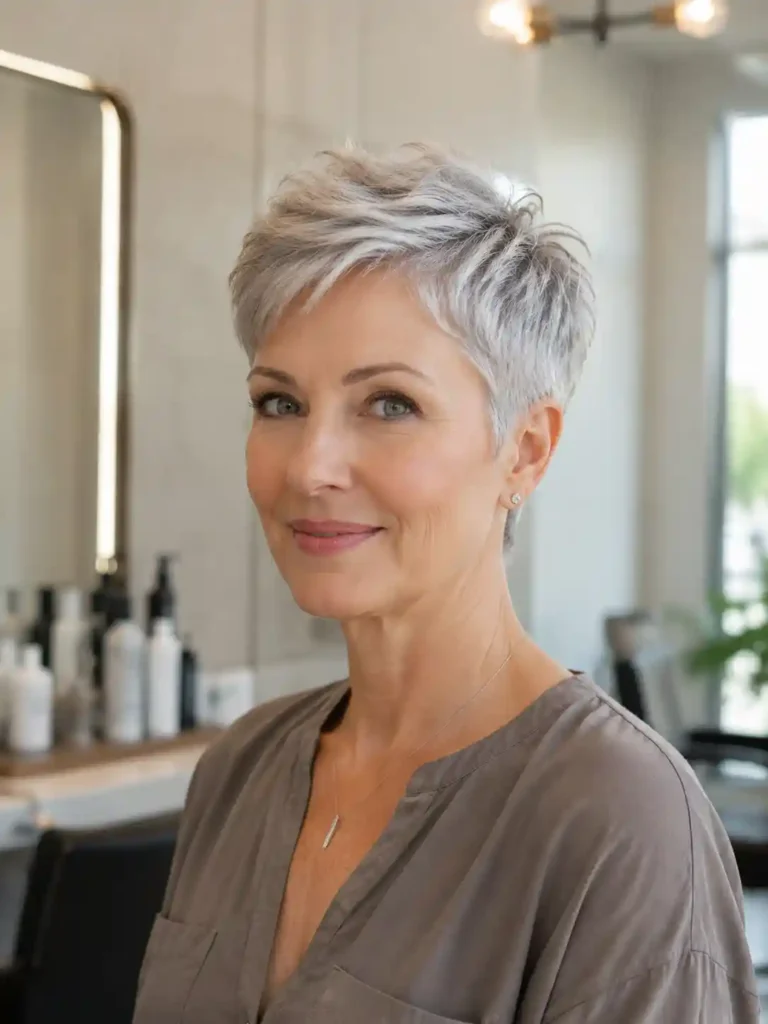
A choppy blonde pixie uses irregular layers and piecey ends to create a relaxed, slightly undone appearance. The difference between the lighter pieces and darker roots can also make fine hair look more dimensional.
Ask for controlled texture rather than aggressive thinning. Too many razor-cut layers may make already fine ends appear sparse. Style the haircut with dry texture spray, gently lifting sections at the crown with your fingers instead of flattening them with a brush.
11. French Pixie
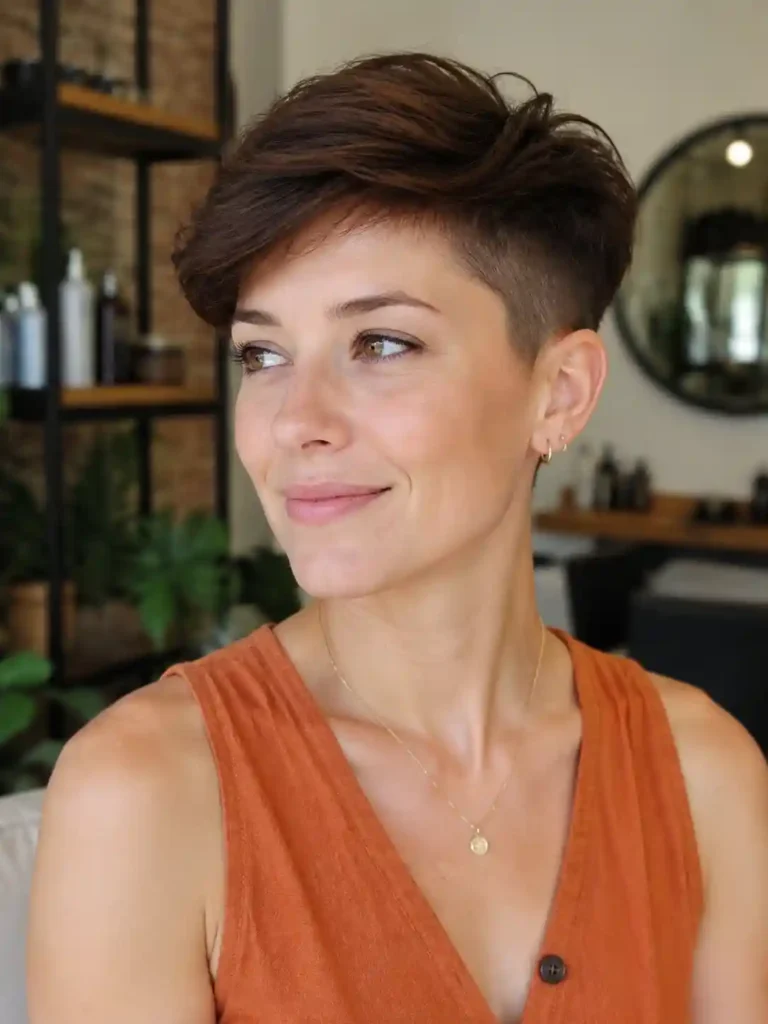
The French pixie has a short, softly tousled shape with a delicate fringe. It looks neat without appearing overly styled, making it a practical option for anyone who prefers simple everyday hair.
A small fringe can help disguise a high hairline while framing the eyes. Let the top retain some natural movement rather than making every strand perfectly smooth. Apply lightweight cream to damp hair, then use your fingertips to guide the pieces into place while drying.
12. Undercut Pixie
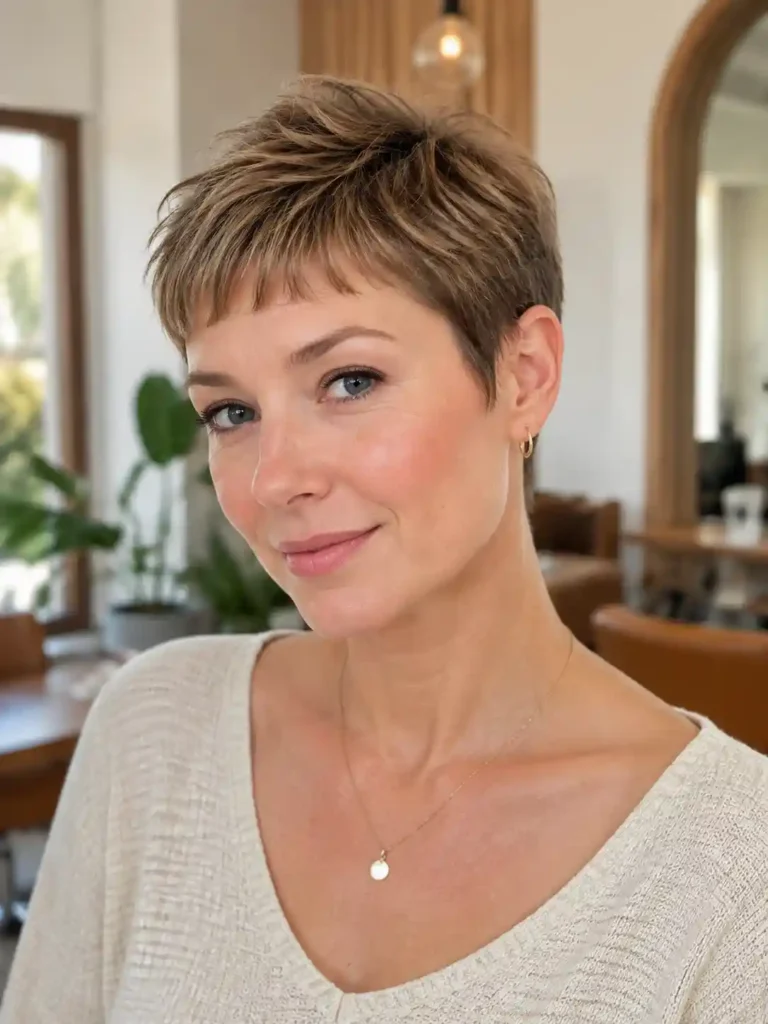
An undercut pixie keeps the sides and back closely cropped while leaving more length through the top. This contrast can make the upper section appear fuller and allows the longer hair to be swept, lifted, or lightly tousled.
The cut needs regular maintenance to keep the undercut clean. Ask your stylist to leave sufficient density on top, especially if your hair is very fine. Use volumizing foam before blow-drying the longer section away from the scalp.
13. Wavy Pixie
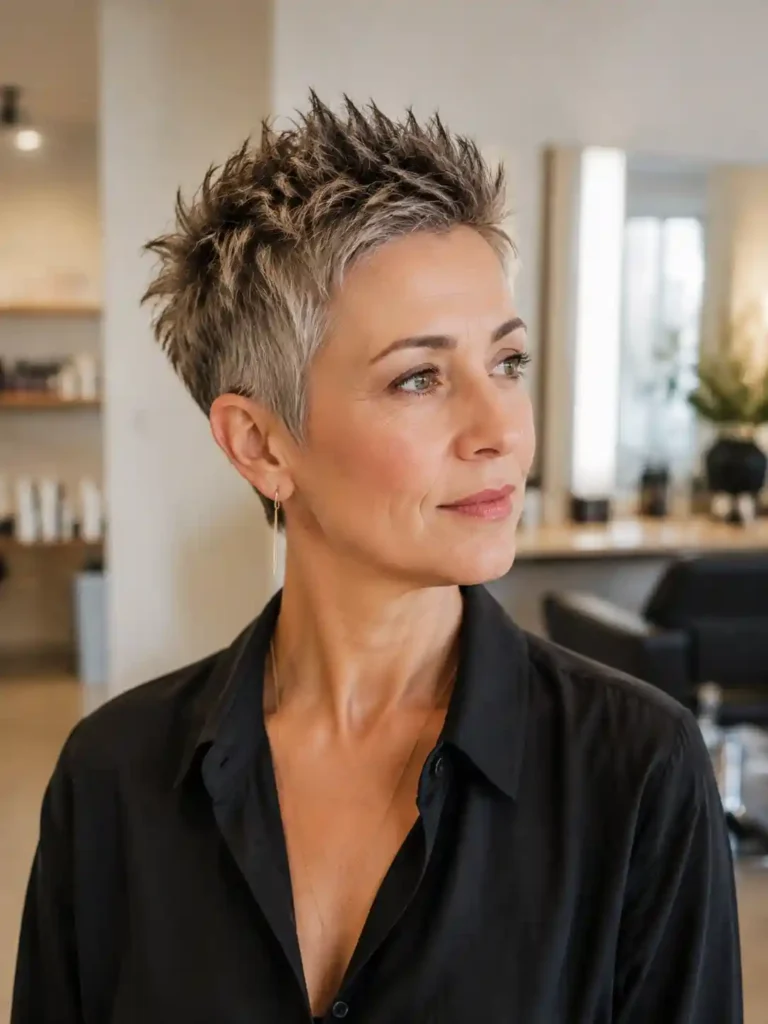
A wavy pixie uses soft bends to give fine hair width, texture, and movement. The waves can be natural or created with a small curling tool, depending on your hair type.
Keep the sides fairly neat so the waves remain the main feature. If you use heat, alternate the direction of each bend for a softer finish. Run your fingers through the hair after it cools, then use a small amount of lightweight spray to hold the shape.
14. Spiky Pixie
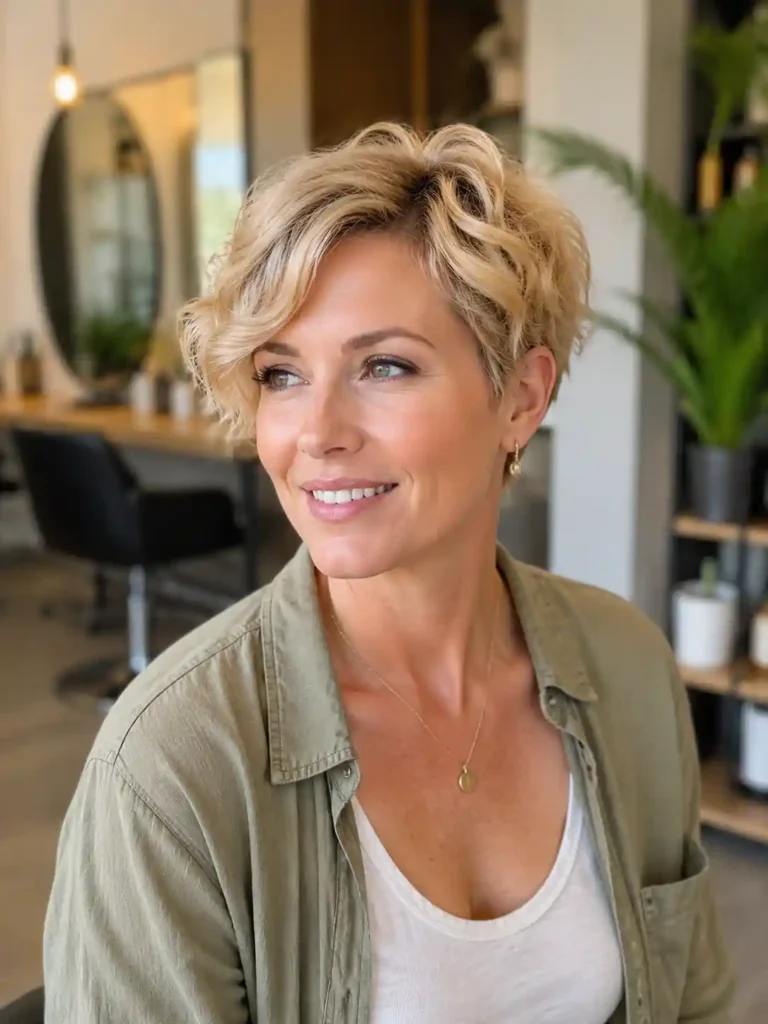
A spiky pixie creates height by directing short layers upward through the crown. It can look bold and sharp or soft and playful depending on the length and styling product used.
This style suits fine hair because shorter strands are easier to lift. Start with volumizing mousse and blow-dry the roots upward. Add a tiny amount of matte paste to the ends. Avoid strong, sticky gel, which may group fine strands together and expose the scalp.
15. Long Fringe Pixie
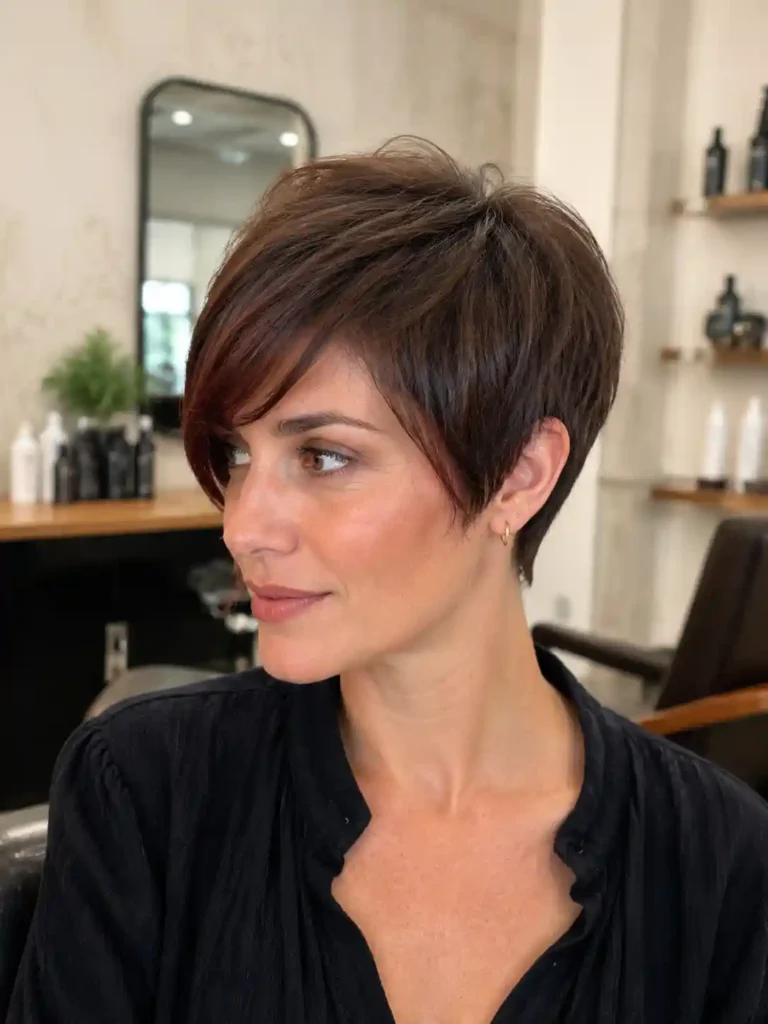
A long-fringe pixie keeps the back and sides short while leaving extra length around the forehead and cheekbone. The fringe can be worn across the face, tucked behind one ear, or lifted away from the forehead.
This haircut offers more flexibility than a very short crop. Ask for gentle layers through the fringe so it moves without becoming thin. A round brush and light root spray can help create shape without making the front look stiff.
16. Layered Crown Pixie
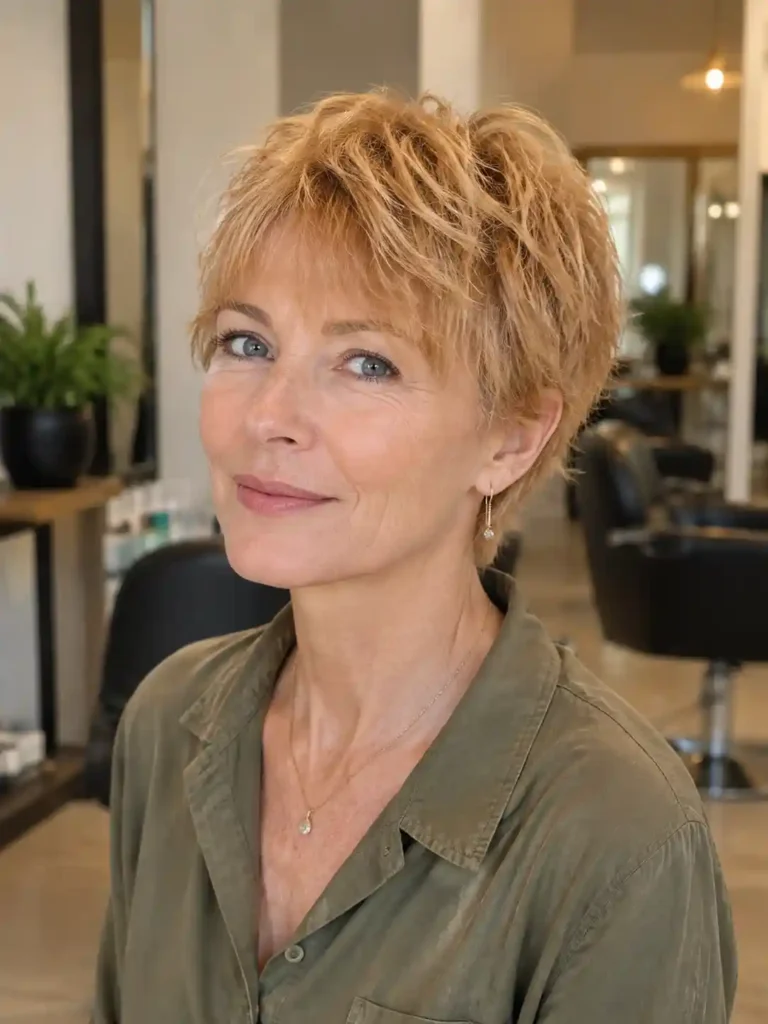
The layered crown pixie concentrates shorter pieces near the top of the head to create lift where fine hair often falls flat. The sides stay smoother, preventing the finished haircut from becoming too wide.
Ask your stylist to place the layers carefully based on your growth pattern and natural part. Apply mousse close to the crown, then blow-dry in the opposite direction before returning the hair to its usual position. This simple technique can create longer-lasting root volume.
17. Sleek Polished Pixie
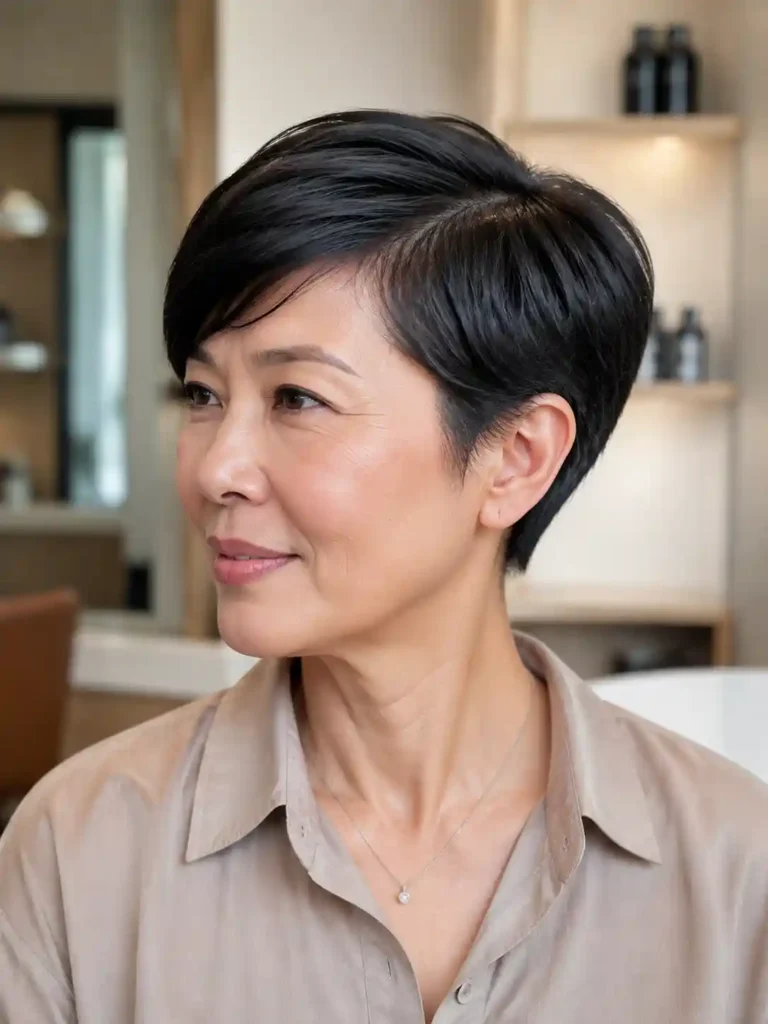
A sleek polished pixie gives fine hair a smooth, controlled shape with a clean side part. It works particularly well for professional settings or anyone who prefers a refined haircut without messy texture.
The cut should follow the natural curve of the head while retaining some fullness on top. Use a lightweight smoothing serum only on the ends. Too much product near the scalp can make fine hair look oily. Finish with flexible spray to control flyaways.
18. Shaggy Pixie
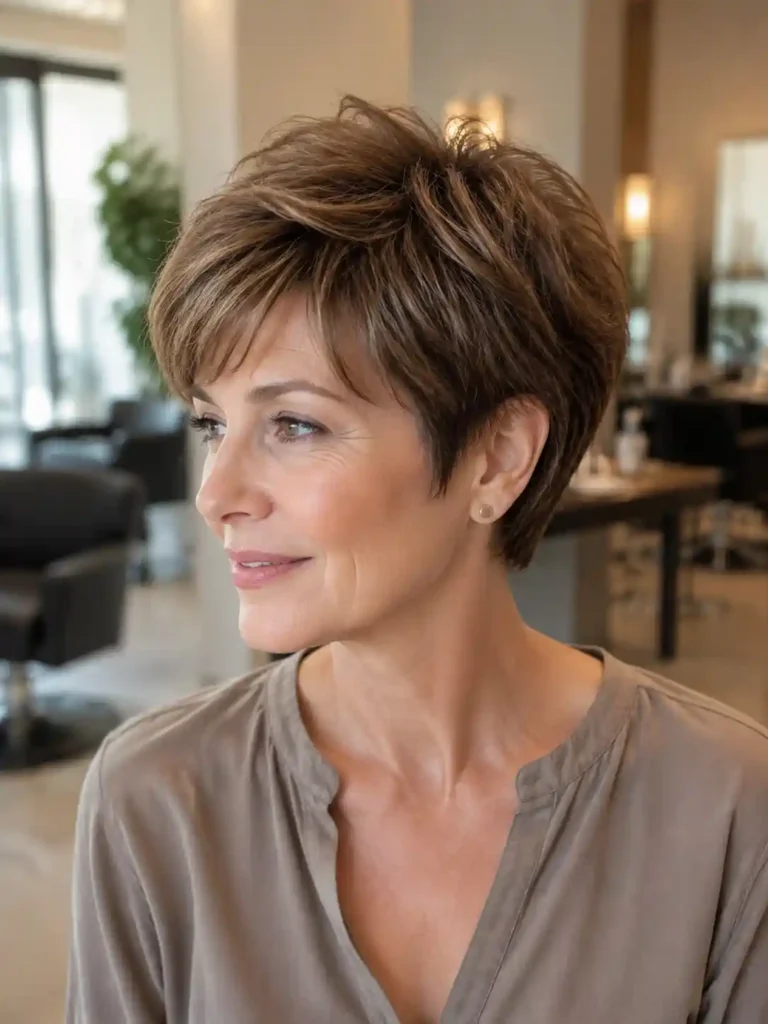
A shaggy pixie includes wispy layers, soft flicked ends, and an intentionally relaxed shape. It has more movement than a classic pixie but remains much shorter and easier to manage than a full shag haircut.
Fine hair benefits from the irregular texture, provided the stylist does not remove excessive weight. Use a light sea-salt or texture spray and scrunch gently while drying. Keep the finish touchable rather than coating every layer with heavy styling wax.
19. Highlighted Pixie
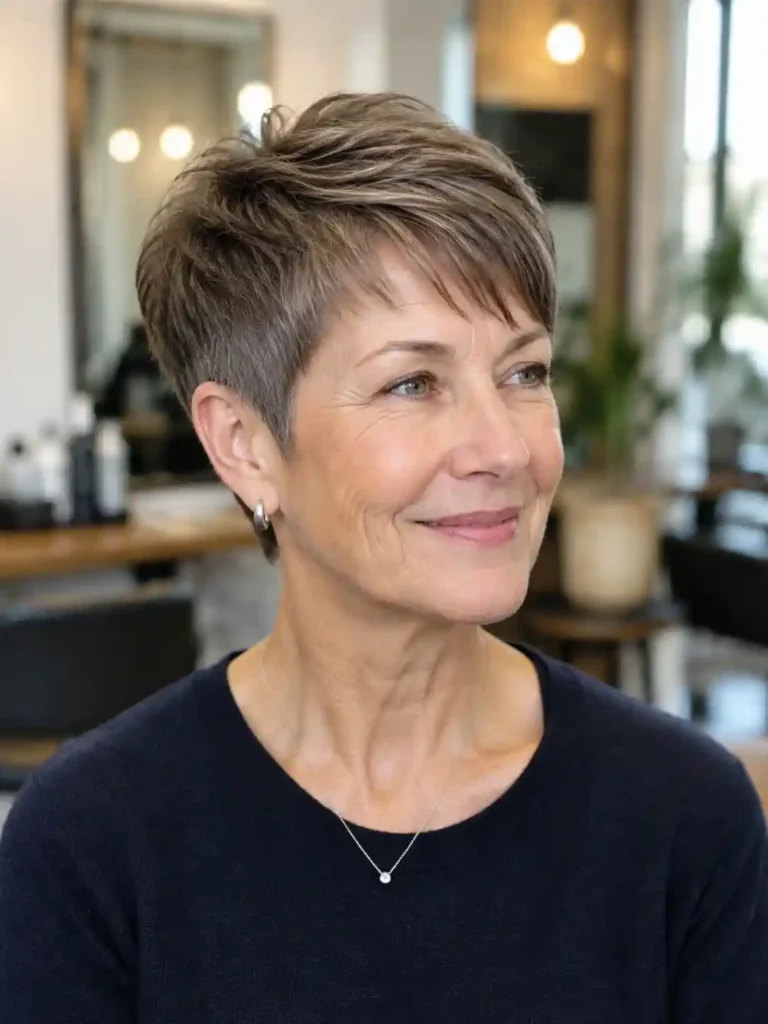
A highlighted pixie uses lighter and darker tones to make the layers more noticeable. Fine hair can appear more dimensional because the color creates contrast between individual sections.
Thin, carefully placed highlights usually look more natural than wide stripes. Ask your colorist to focus around the fringe and upper layers where the light naturally falls. Use color-safe products and limit excessive heat to prevent fragile, lightened strands from becoming dry or brittle.
20. Classic Tapered Pixie
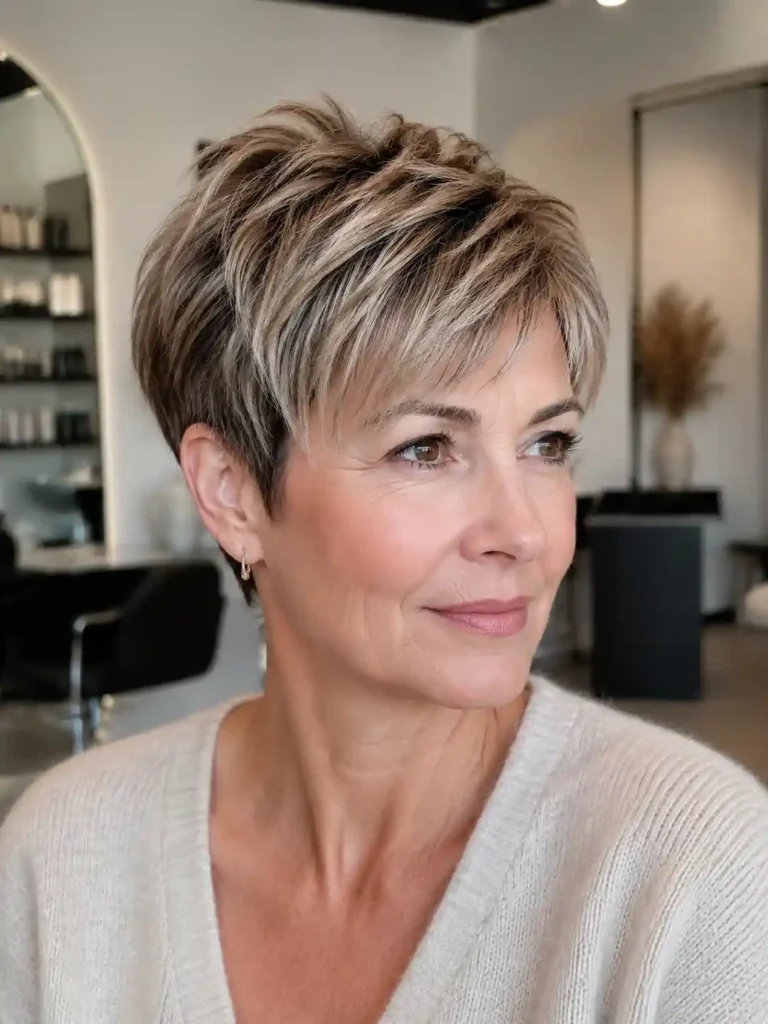
A classic tapered pixie stays short around the ears and nape while gradually becoming longer toward the crown. The balanced shape is easy to wear and can be adjusted for different face shapes and personal styles.
This is a dependable choice if you want a pixie that feels polished without requiring complicated daily styling. Add light mousse to damp hair, lift the crown while blow-drying, and sweep the front gently to one side.
You may like also: 25 Shag haircuts Ideas Every Occassion
How to Choose a Pixie Cut for Fine Hair
Start by looking at your natural growth pattern, hairline, face shape, and how much daily styling you are willing to do. A longer pixie provides more flexibility, while a cropped style may require less brushing but more frequent salon visits.
Tell your hairstylist that your goal is to preserve density. Fine hair does not always need heavy thinning or many short layers. Carefully placed layers create movement, but removing too much hair can make the ends look sparse.
How to Make Fine Hair Look Fuller
Fine hair usually responds best to lightweight products and gentle root-lifting techniques. Heavy oils, thick creams, and strong waxes can pull the hair down.
Try these simple styling habits:
- Apply volumizing mousse to damp roots.
- Blow-dry against your natural part for lift.
- Use texture spray mainly through the crown.
- Keep conditioner away from the roots.
- Avoid applying several styling products together.
- Ask for regular trims to maintain the pixie shape.
- Use low heat to protect fragile strands.
Frequently Asked Questions
Is a pixie cut good for fine hair?
Yes. A well-cut pixie can make fine hair look fuller by removing weak ends and creating lift through the crown. The stylist should preserve enough density and avoid excessive thinning.
Which pixie cut creates the most volume?
A layered crown pixie, tousled pixie, or textured crop usually creates the most visible volume. Shorter layers are lighter, making them easier to lift away from the scalp.
How often should a pixie haircut be trimmed?
Most pixie cuts need trimming every four to six weeks. Longer pixie bobs may last six to eight weeks, depending on the shape and how quickly your hair grows.
Should fine hair be razor-cut?
A razor can create soft movement, but it must be used carefully. Heavy razor cutting may leave fine hair looking thin or frayed. Scissor-cut layers are often easier to control.
What product works best for a fine-hair pixie?
Light mousse, root-lifting spray, dry texture spray, and flexible hairspray are useful options. Choose one or two lightweight products instead of layering several heavy formulas.