20 Butterfly Haircut Ideas for Long Hair
A butterfly haircut is a smart choice when you want more shape and movement without losing your long hair. Shorter layers frame the face, while longer layers keep the overall length full and flowing.
From soft curtain bangs to bouncy blowouts and natural curls, these butterfly haircut ideas offer plenty of salon inspiration. Use the images and descriptions below to find the layering style that works for your hair texture, thickness, and daily routine.
1. Classic Butterfly Layers
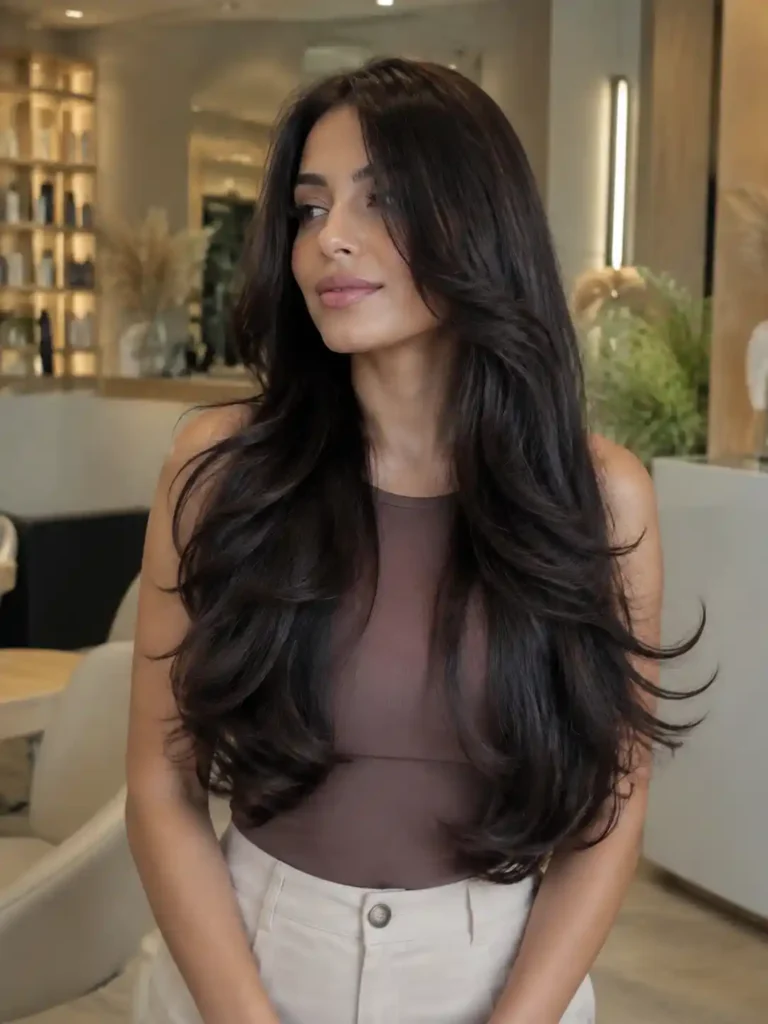
Classic butterfly layers combine shorter face-framing pieces with long, flowing sections through the bottom. The upper layers curve away from the face, creating the winged shape that gives this haircut its name.
This style works especially well on long, straight or slightly wavy hair. Ask your stylist to begin the shortest layer near your cheekbones or chin, depending on how much framing you want.
Use a round brush to direct the front pieces away from your face. A lightweight finishing spray will hold the shape without making the layers feel stiff.
2. Butterfly Cut With Curtain Bangs
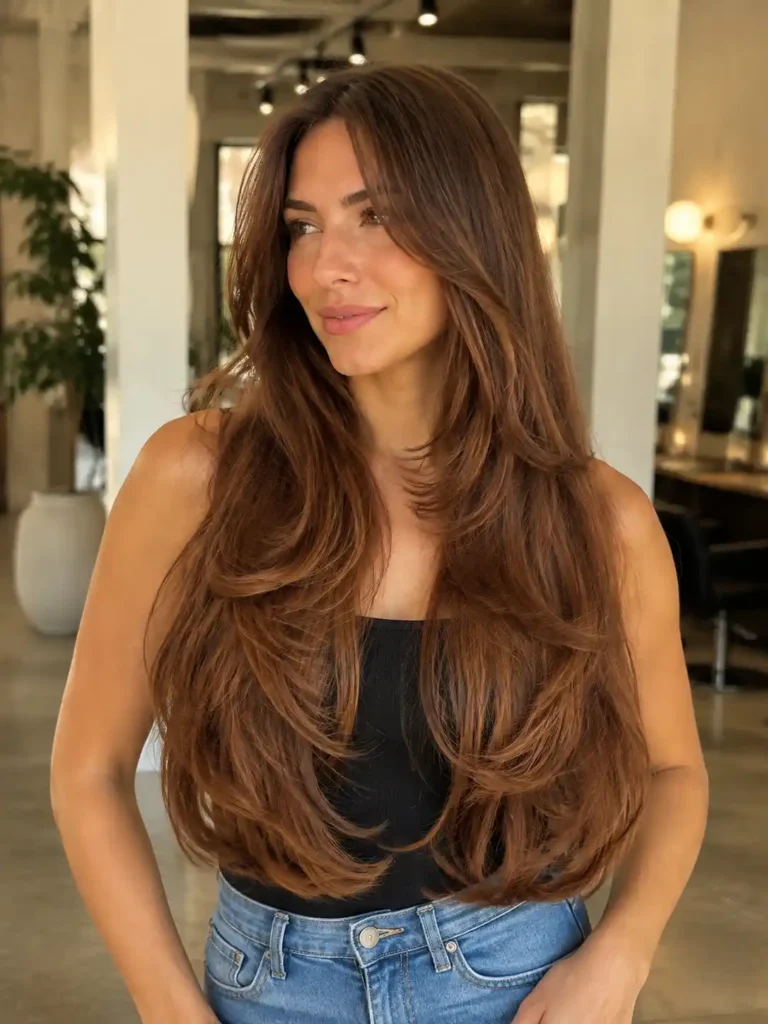
Curtain bangs blend naturally into a butterfly haircut because both features sweep away from the center of the face. The bangs create softness around the forehead, while the longer layers add movement below the shoulders.
Ask for bangs that are shorter in the middle and gradually become longer near the temples. They should connect smoothly to the face-framing layers rather than appearing like a separate fringe.
Blow-dry the bangs forward first, then split and brush them outward. This gives them a balanced curve and prevents the center from falling flat.
3. Soft Blonde Butterfly Cut
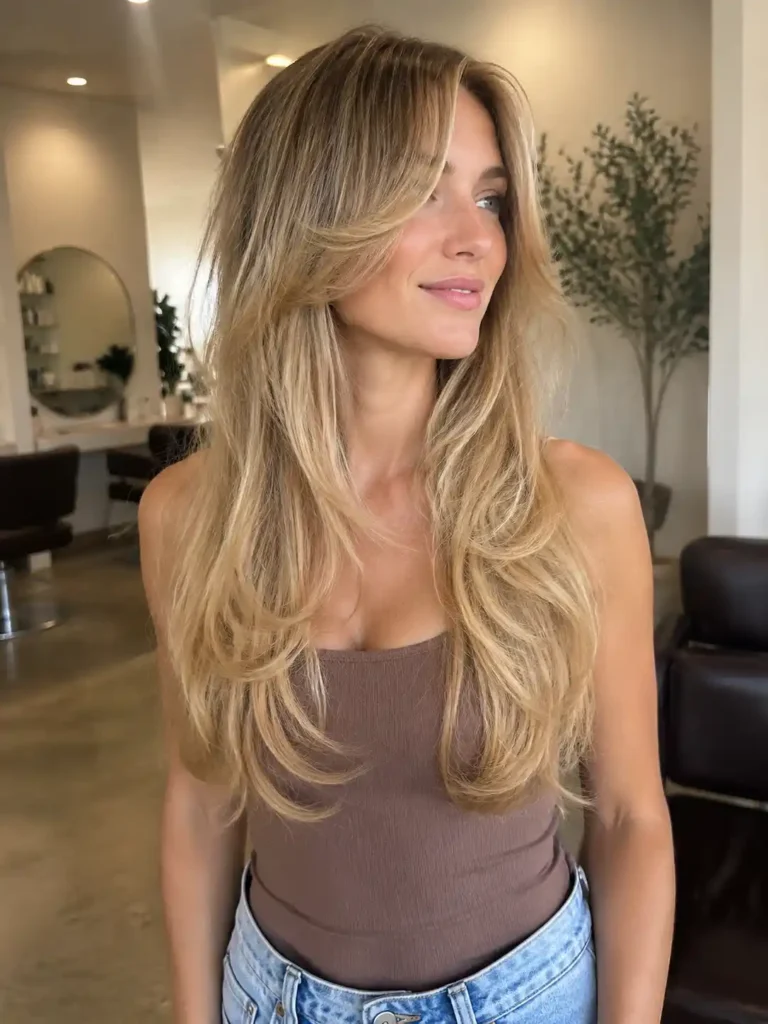
A soft blonde butterfly cut uses light layering and gentle curves to make long blonde hair feel fresh without removing too much length. Different blonde tones also help each layer appear more defined.
The shortest pieces can begin around the cheekbones, while longer sections fall below the shoulders. This creates movement around the face while preserving fullness through the bottom.
Use a heat protectant before styling because lightened hair can be more sensitive to heat. Keep your blow-dryer at a medium temperature and finish with a small amount of smoothing serum on the ends.
More hair style: 20 Pixie Haircut Ideas for Fine Hair That Add Volume
4. Voluminous Brunette Butterfly Cut
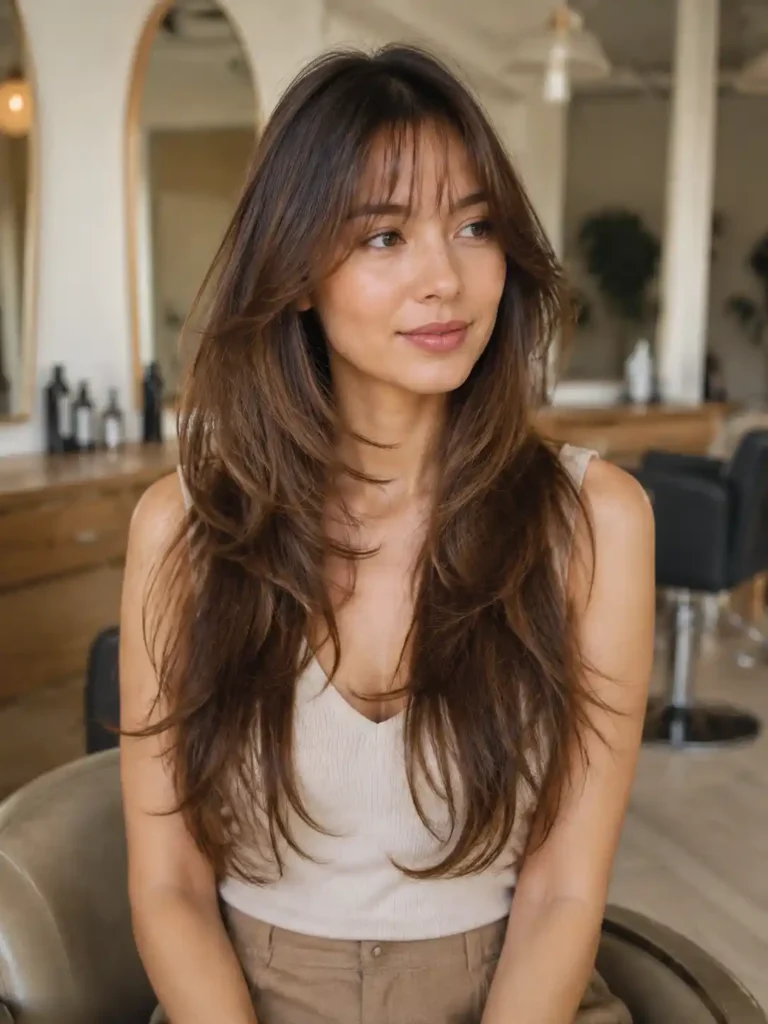
A voluminous brunette butterfly cut focuses on lift at the crown and large, rounded layers through the lengths. Dark hair reflects light beautifully when the layers are smooth and properly shaped.
This style is a good match for medium or thick hair that tends to feel heavy. The shorter upper layers remove some weight and help the haircut sit away from the scalp.
Apply volumizing mousse near the roots before blow-drying. Use a large round brush or rollers to set the upper sections, then release them after the hair has cooled.
5. Butterfly Cut With Wispy Bangs
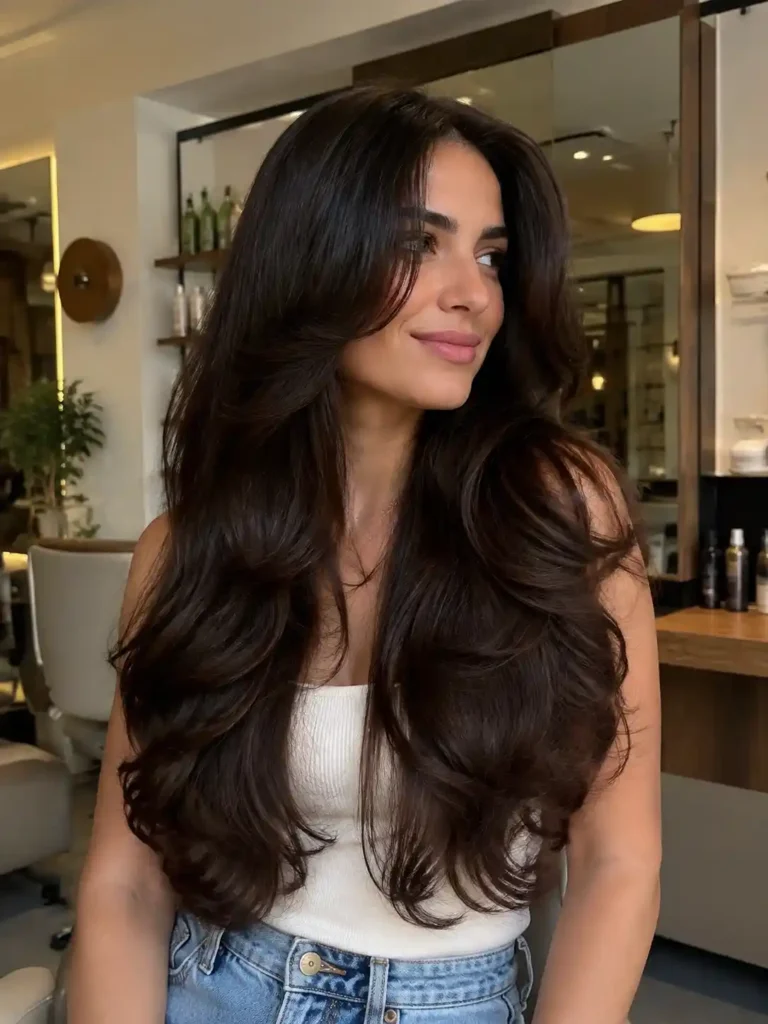
Wispy bangs give the butterfly haircut a light, relaxed finish. Unlike thick, blunt bangs, they allow small sections of the forehead to remain visible and blend easily with the surrounding layers.
This is a useful option if you want a fringe without committing to a heavy bang. Ask your stylist to keep the pieces soft and slightly uneven rather than cutting a straight line.
Dry your bangs first because fine fringe dries quickly. Move the hair from side to side with a brush, then let a few pieces fall naturally across the forehead.
6. Curly Butterfly Haircut
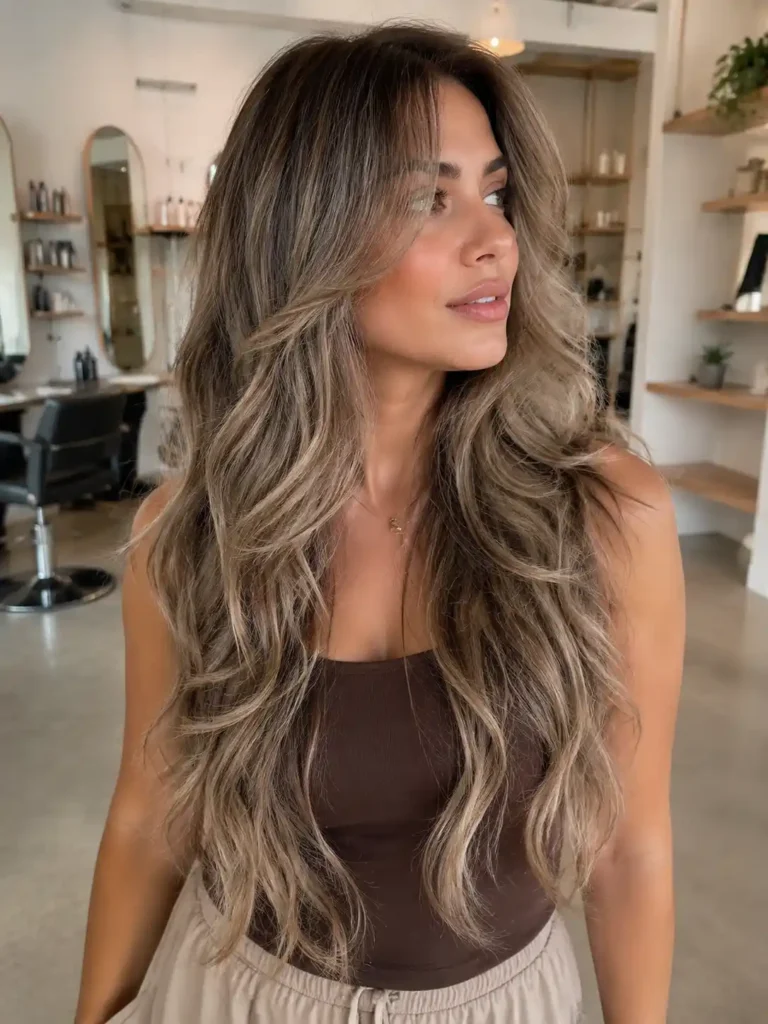
A curly butterfly haircut creates a rounded shape by placing shorter curls around the face and longer curls through the bottom. The different lengths prevent long curly hair from becoming heavy or triangular.
Your stylist should examine how your curls shrink and group together before cutting. Cutting every section to the same measured length may produce an uneven result once the curls dry.
Apply lightweight curl cream or foam to wet hair and scrunch gently. Let it air-dry or use a diffuser on low heat without disturbing the curl pattern.
7. Wavy Butterfly Layers
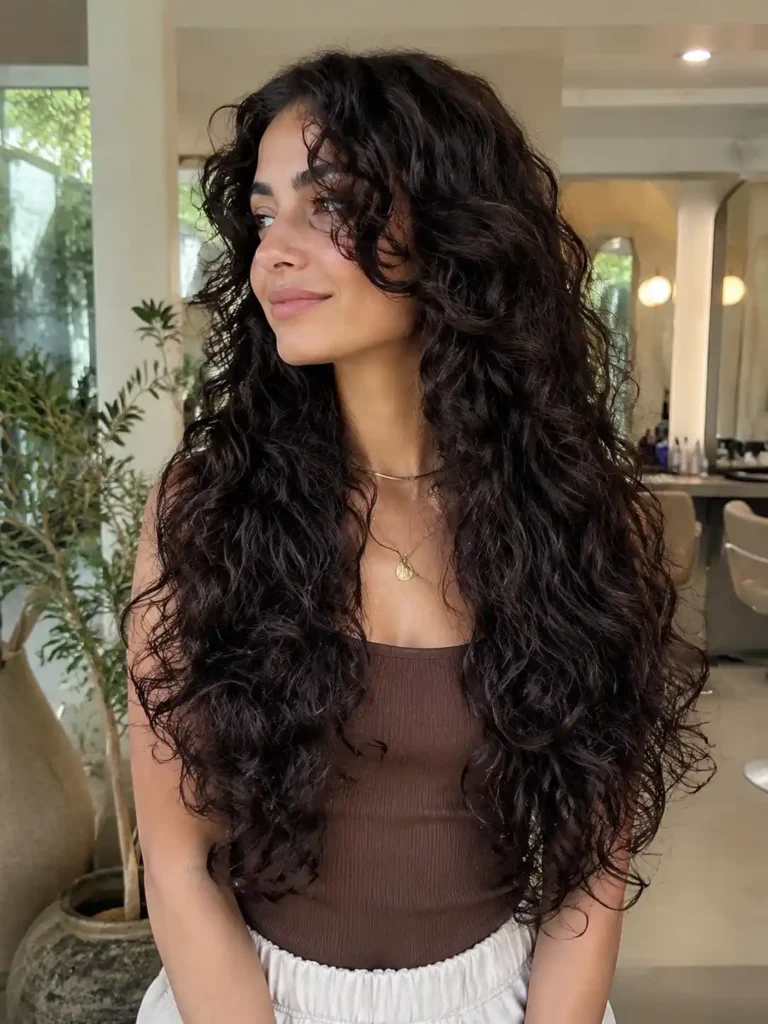
Wavy butterfly layers give long hair movement without requiring a perfectly smooth blowout. The natural bends help reveal the different lengths and create a relaxed, wearable shape.
Ask for longer layers if your waves tend to become frizzy when cut too short. The front sections can start near the chin and gradually connect to the longer pieces.
Apply a light styling foam to damp hair and twist a few sections away from your face. Diffuse or air-dry, then gently separate the waves with your fingers.
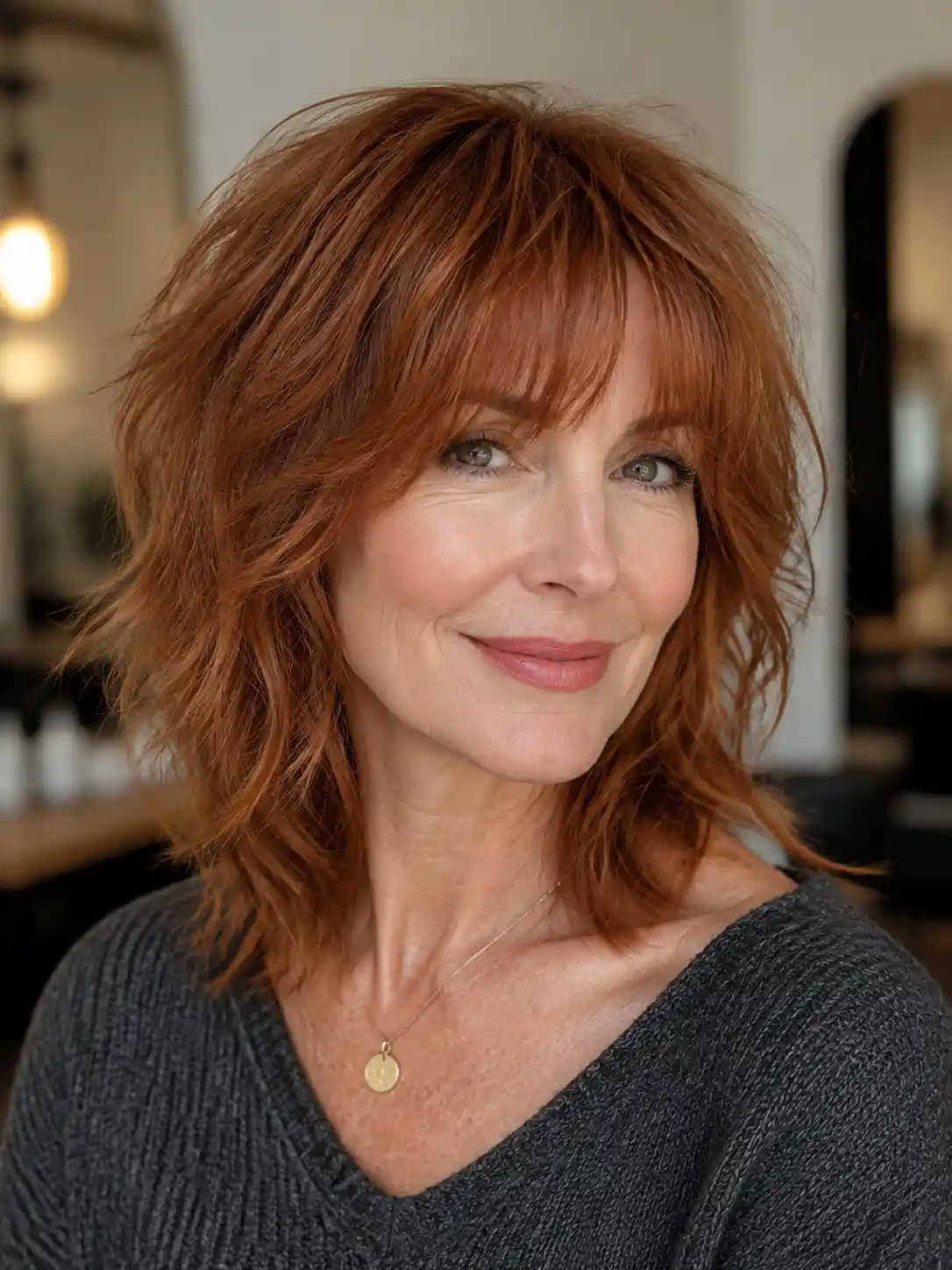
8. Copper Butterfly Cut
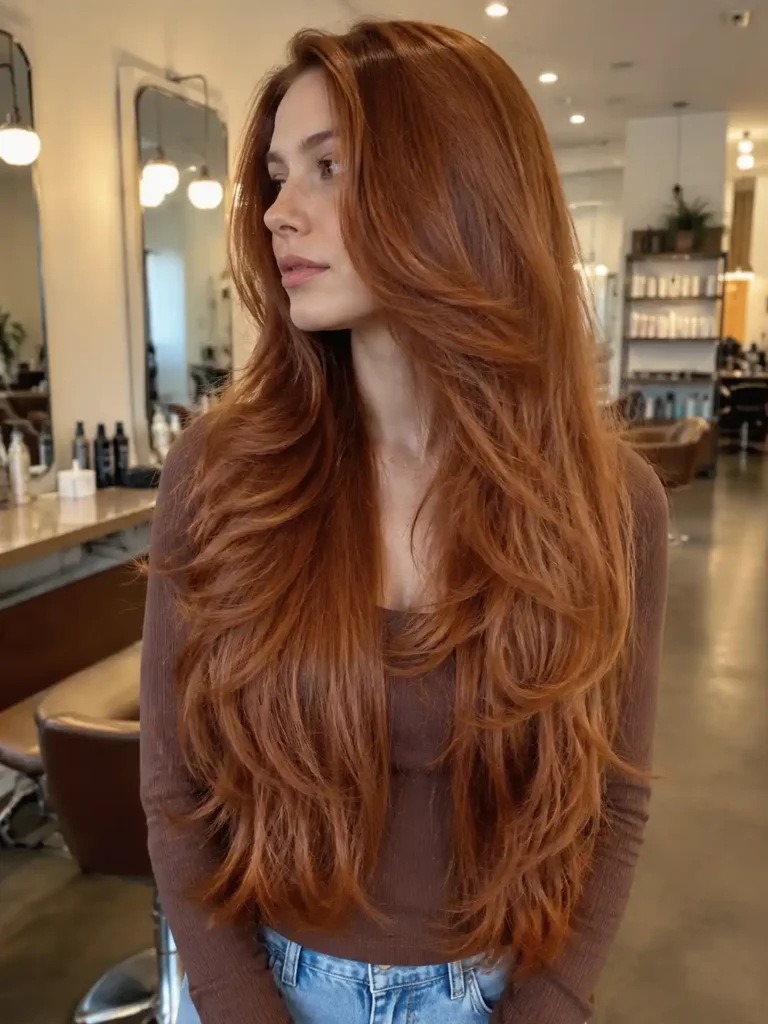
Copper color makes each sweeping butterfly layer easier to see. The warm shade catches the light as the hair moves, while the curved face-framing pieces draw attention toward the cheekbones and jawline.
This version looks especially striking with a smooth blowout, but it can also be worn with natural waves. Ask for long, blended sections that preserve fullness through the ends.
Use shampoo and conditioner made for color-treated hair. Wash with cooler water when possible, as frequent hot washing may cause copper tones to fade faster.
9. Butterfly Cut With Side Bangs
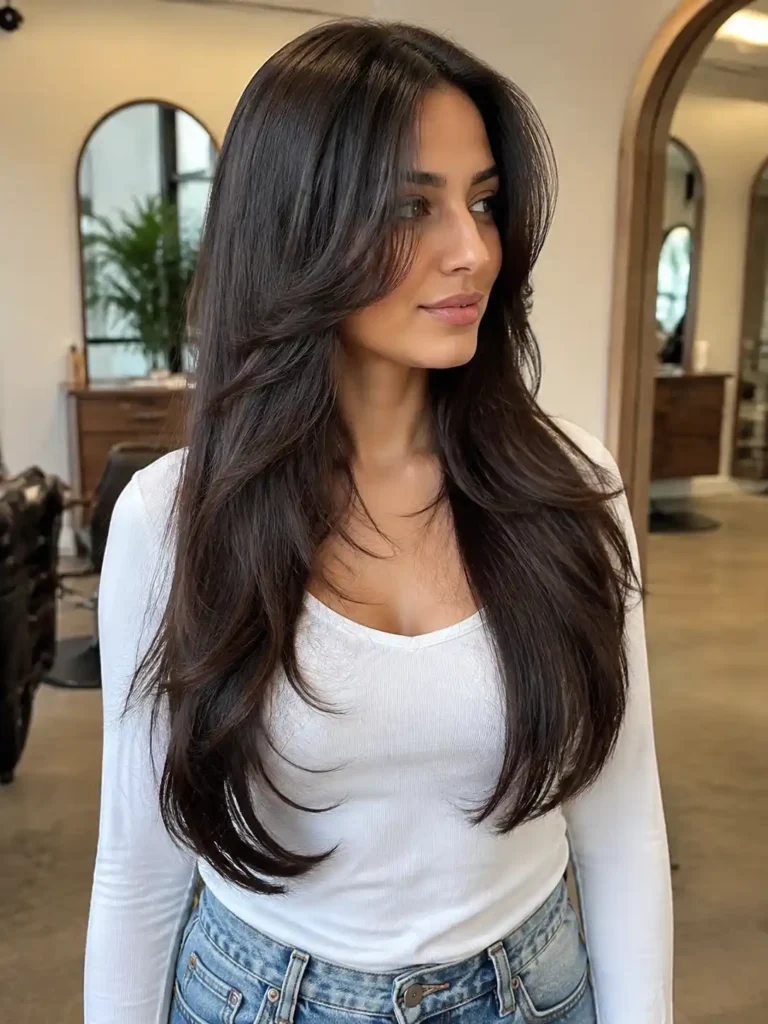
Side bangs create an asymmetrical version of the butterfly haircut. The longer fringe sweeps across the forehead and connects to the first face-framing layer, giving the cut a soft diagonal line.
This style can help balance a round or square face, although the exact bang length should be chosen according to your features. A cheekbone-length side bang is usually easier to maintain than a very short one.
Blow-dry the fringe in the opposite direction first, then sweep it back into place for extra lift.
10. Sleek Butterfly Haircut
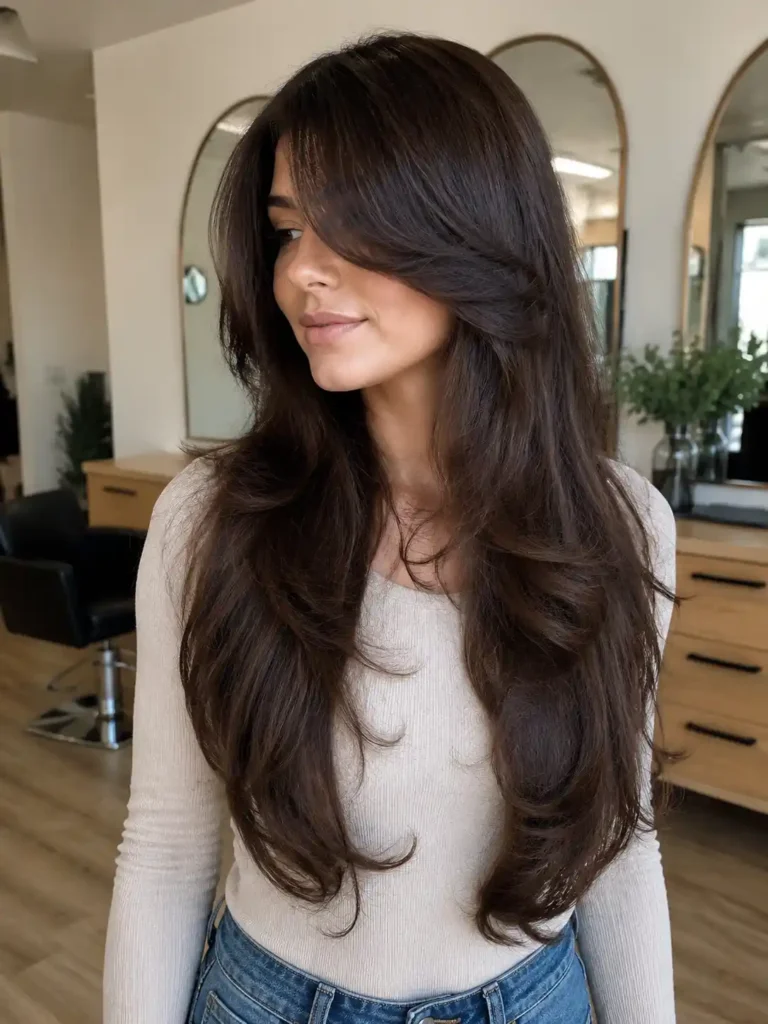
A sleek butterfly haircut offers movement without relying on large curls or a dramatic blowout. The hair remains smooth and straight, while subtle curved layers create shape around the face and ends.
This option works well if you prefer a clean, polished finish. The difference between each layer should remain visible, but the transitions should not look choppy.
Apply heat protectant before using a flat iron. Instead of pulling the iron straight down, curve it slightly inward or outward near the ends to reveal the layered shape.
11. Balayage Butterfly Layers
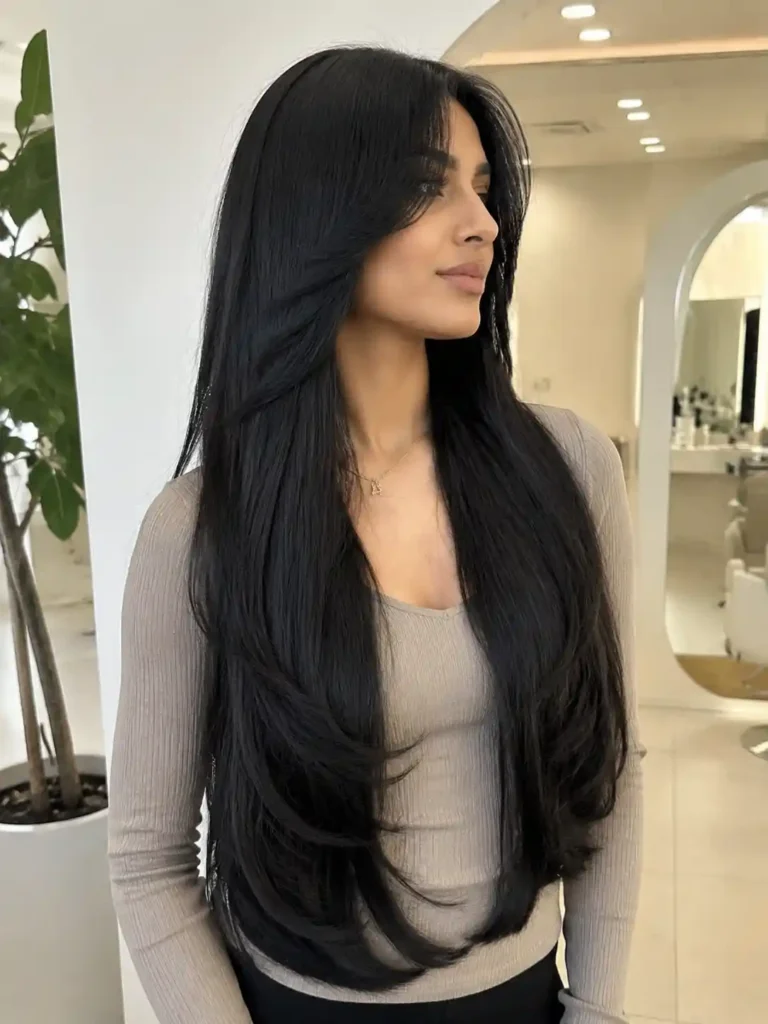
Balayage and butterfly layers work well together because the lighter ribbons can follow the direction of the haircut. Proper highlight placement makes the face-framing pieces and curved ends more noticeable.
Ask your colorist to place brighter pieces around the face and through selected upper layers. Keeping some darker sections underneath creates depth and prevents the color from looking flat.
Use a moisturizing hair mask regularly, especially if your ends have been lightened. A shine spray can also help the different tones catch the light after styling.
12. Butterfly Cut With Bottleneck Bangs
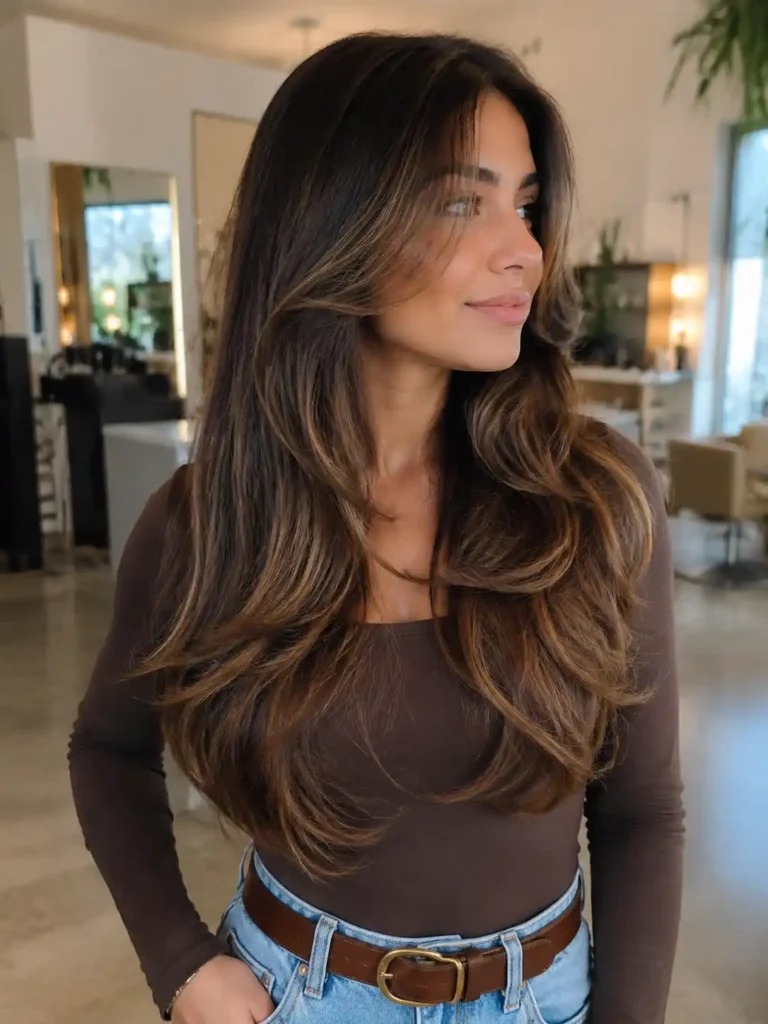
Bottleneck bangs are narrower near the forehead and gradually become wider around the cheekbones. Their curved shape flows naturally into butterfly layers and creates a soft frame around the eyes.
This fringe offers more coverage than wispy bangs but feels lighter than a full blunt fringe. Ask your stylist to connect the outer bang pieces to the shorter side layers.
Use a small round brush for the center and a larger brush for the outer sections. Direct the sides away from your face to create the open shape.
13. Fine-Hair Butterfly Cut
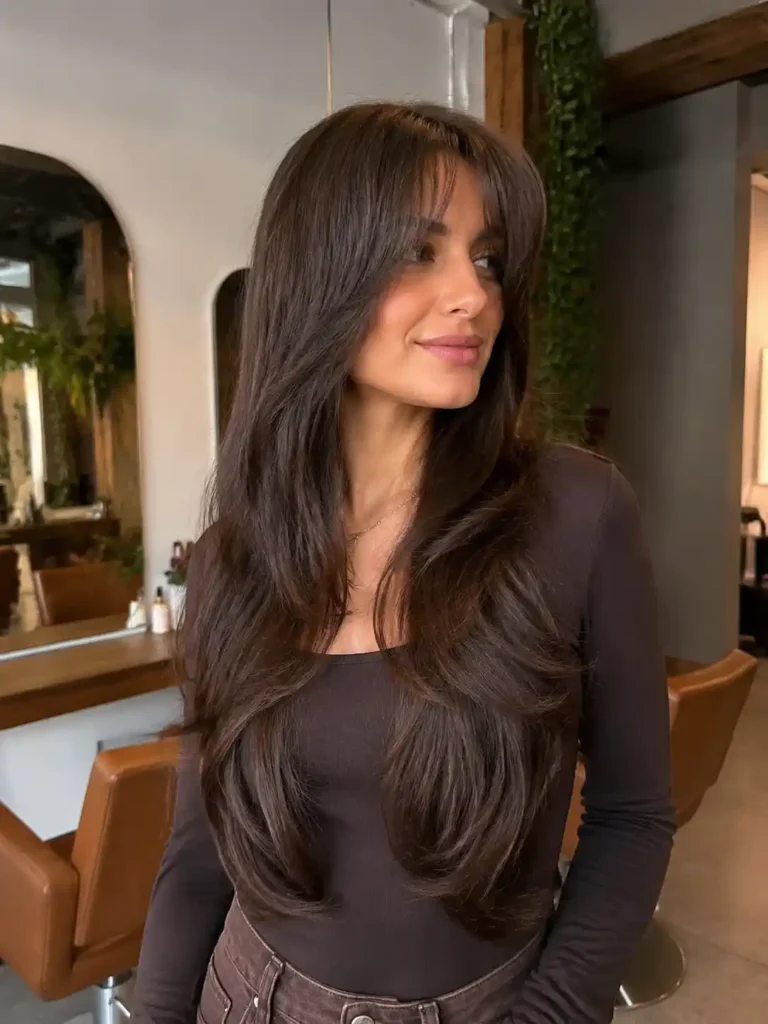
A butterfly cut can work on fine hair, but the layers must be placed carefully. Too many short sections may make the bottom look thin, so preserving density should be the main goal.
Ask for a few face-framing layers and longer internal layers rather than heavy layering throughout the entire head. A soft, rounded baseline can help the ends appear fuller.
Use lightweight mousse at the roots and avoid heavy oils near the scalp. Blow-dry against your usual part before placing the hair back for added lift.
14. Thick-Hair Butterfly Cut
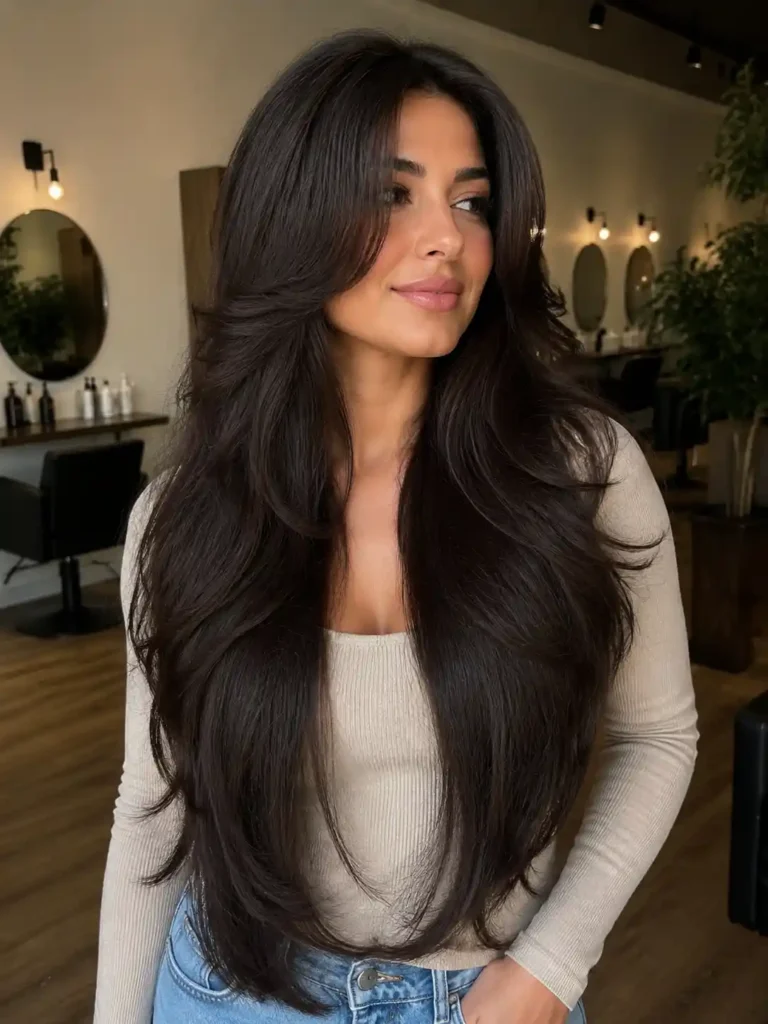
Thick hair can benefit from butterfly layers because the cut removes weight without sacrificing length. Shorter upper sections add shape, while longer layers prevent the hairstyle from becoming too wide.
Your stylist may use internal layering to reduce bulk underneath the visible sections. This should be done carefully so the bottom remains full rather than looking thin or disconnected.
Apply smoothing cream through damp lengths before blow-drying. Divide the hair into smaller sections so every layer can be shaped properly with the brush.
15. Butterfly Cut With Flipped Ends
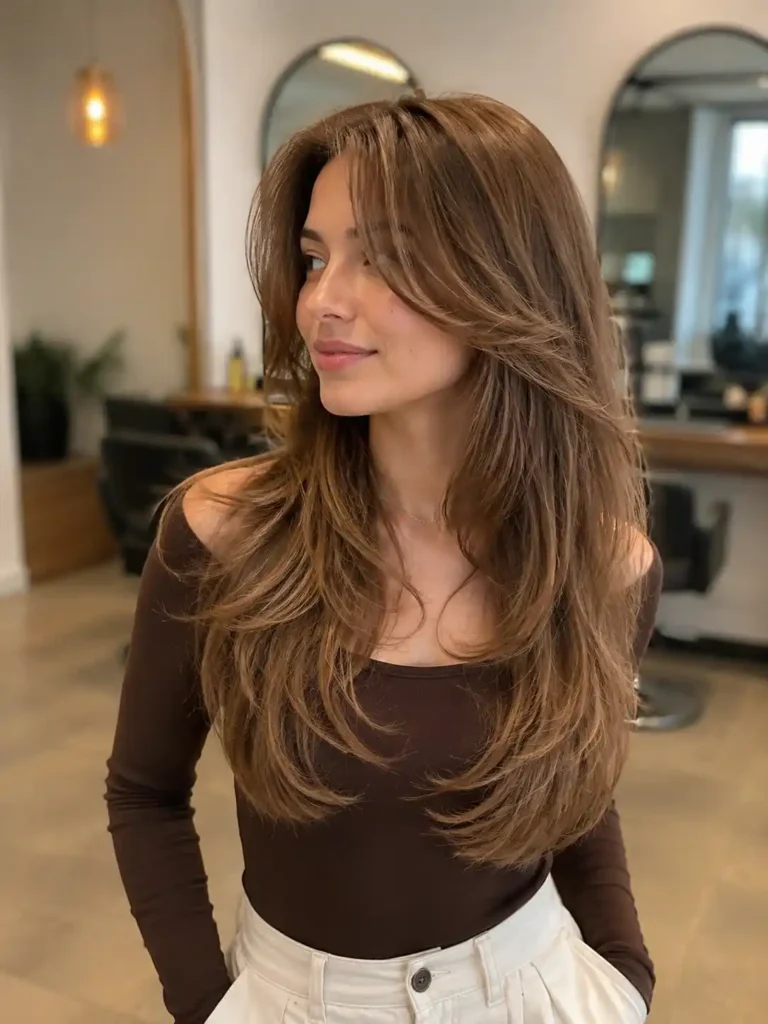
Flipped ends give the butterfly haircut a playful, retro-inspired finish. Instead of curling all the layers inward, the ends are directed outward to make every section appear lighter and more animated.
The flips can be soft and subtle or bold and rounded. Long layers usually produce a smoother result because they have enough length to hold the curved shape.
Use a round brush to roll the ends away from your neck. Let each section cool around the brush or a roller before releasing it.
16. Center-Part Butterfly Cut
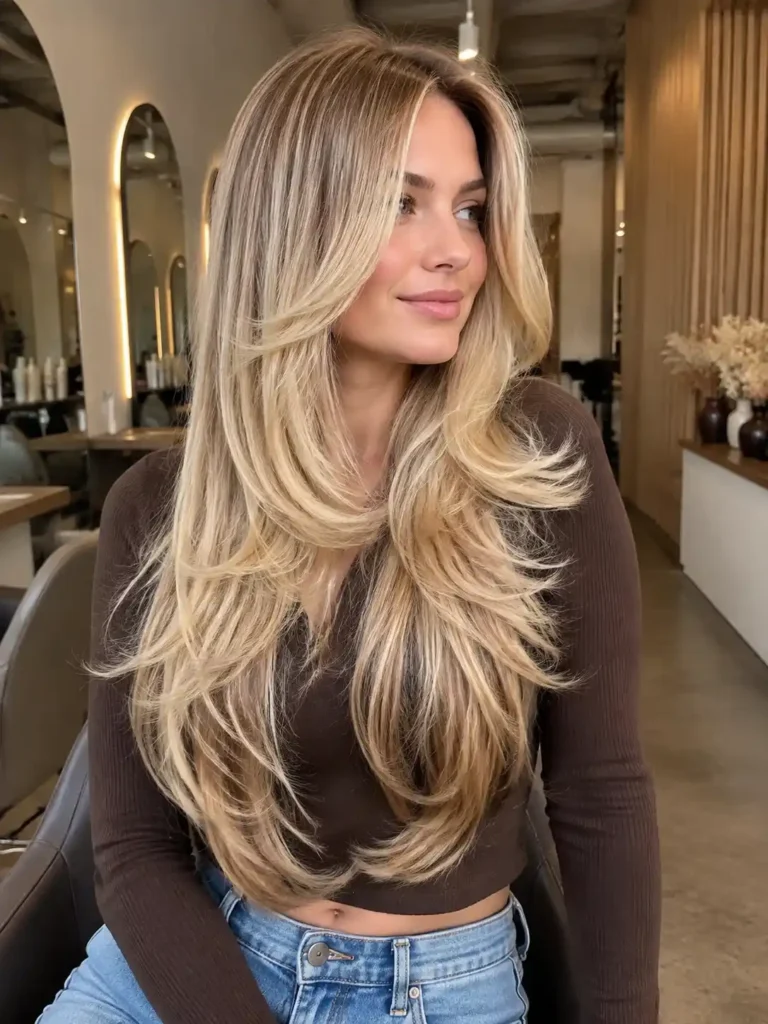
A center part creates balance by allowing the face-framing layers to fall evenly on both sides. This symmetrical shape makes the butterfly effect especially noticeable around the cheekbones and shoulders.
Ask your stylist to check both sides carefully while your hair is parted in the middle. The front layers should appear balanced without looking perfectly identical or stiff.
Blow-dry the left and right sections away from the face. Use matching rollers on both sides if you want a smooth, even curve.
17. Butterfly Layers With Highlights
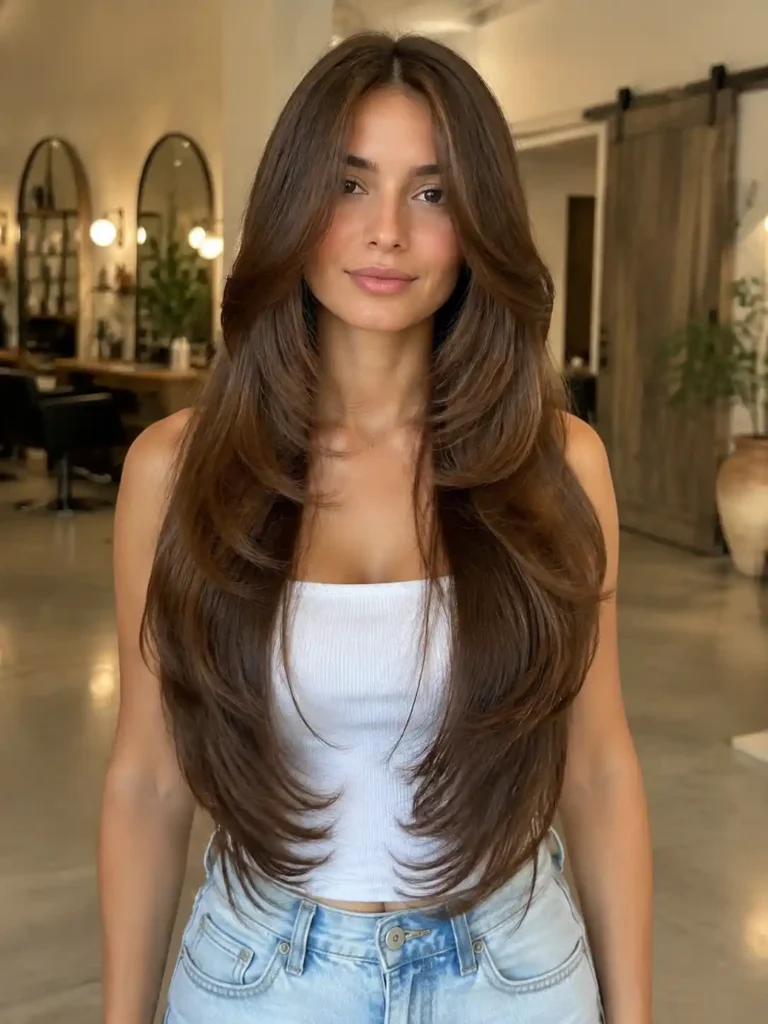
Fine highlights can bring more depth to a long butterfly haircut. When the lighter strands follow the curved layers, they create separation and make the haircut appear more dimensional.
Highlights do not need to cover the entire head. A few lighter pieces around the face, crown, and upper lengths may be enough to draw attention to the shape.
Use color-safe products and protect highlighted sections from excessive heat. Apply a light oil only to the ends if they begin to feel dry.
18. Air-Dried Butterfly Cut
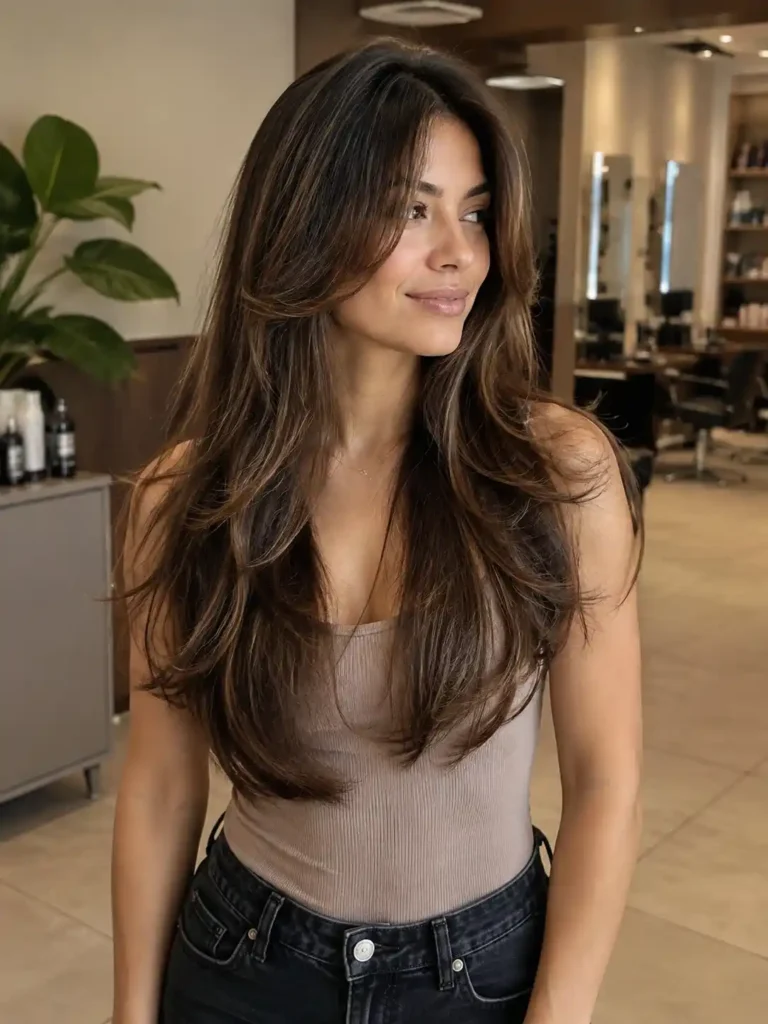
An air-dried butterfly cut is designed to work with your natural texture instead of requiring a full blowout every day. The layers should create movement even when the hair is not brushed into large curls.
Longer, softer layers are usually easier to air-dry than short, heavily feathered sections. Tell your stylist how your hair naturally dries before deciding where each layer should begin.
Apply leave-in conditioner to damp ends and gently shape the front pieces away from your face. Avoid brushing the hair once it begins to dry.
19. Glamorous Butterfly Blowout
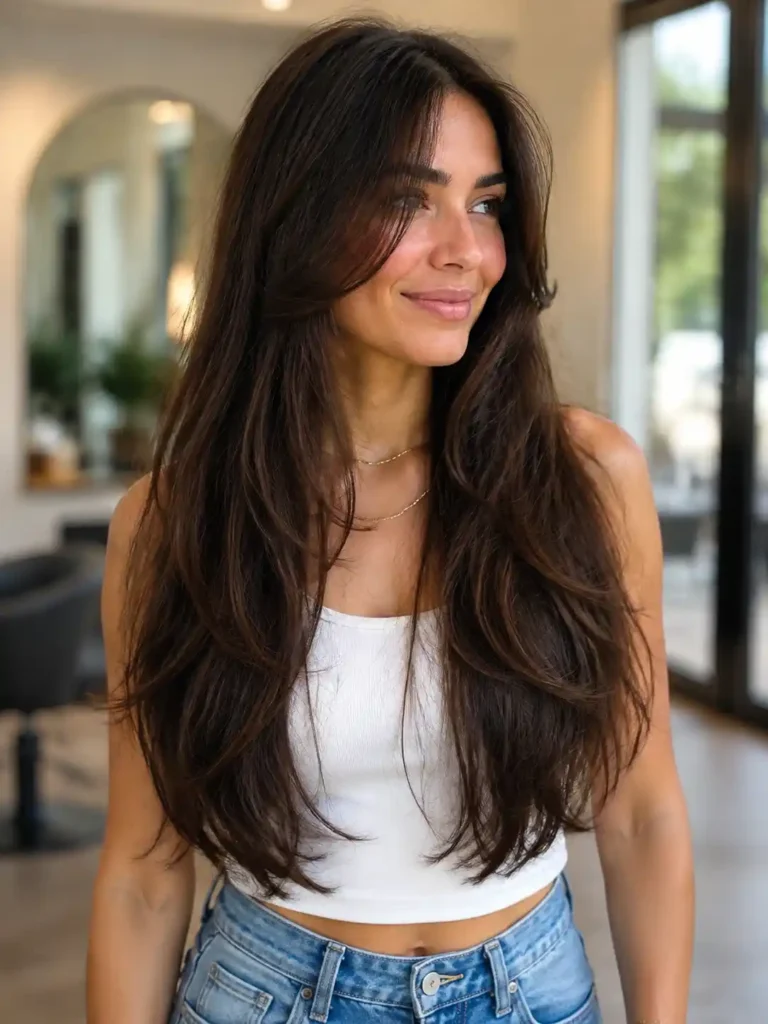
A glamorous butterfly blowout uses high crown volume, rounded front pieces, and large curls through the ends. It creates the most dramatic version of this layered haircut.
The haircut provides the structure, but the finished effect depends heavily on styling. Work in sections and lift each one away from the scalp while blow-drying.
Set the warm sections in large rollers and leave them until completely cool. Remove the rollers gently, then use your fingers or a wide-tooth comb to soften the curls.
20. Subtle Butterfly Layers
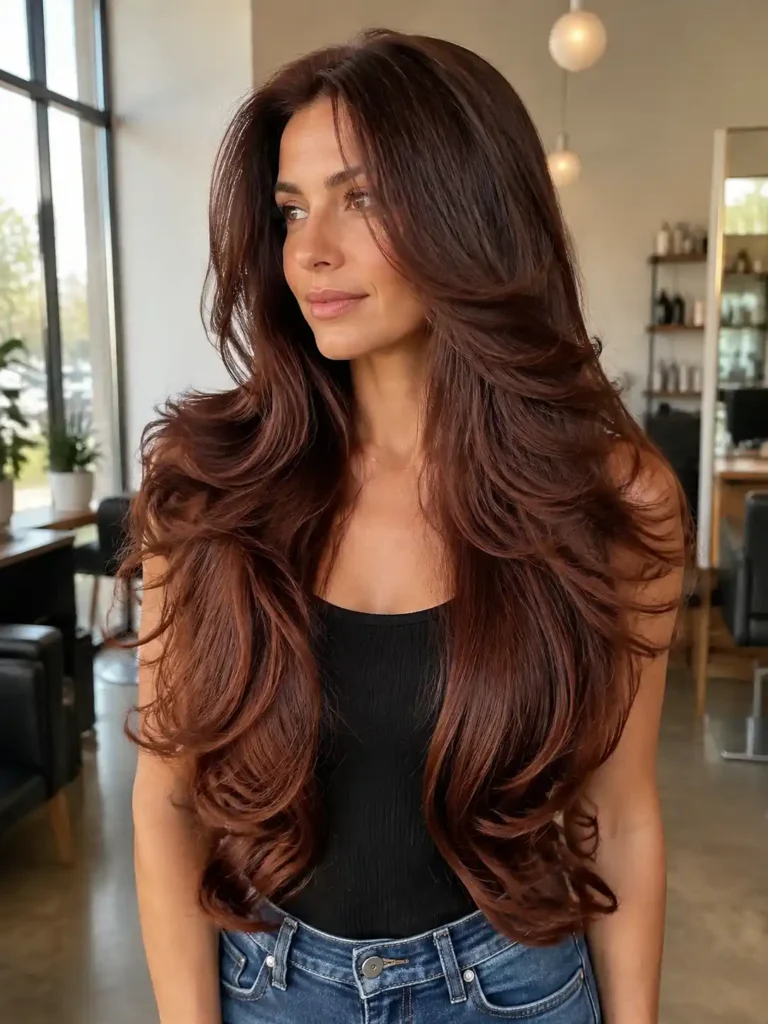
Subtle butterfly layers are ideal when you want a small update without making your hair look heavily layered. The shortest pieces may begin near the chin, while the remaining layers blend quietly into the length.
This version is easier to grow out and does not require a dramatic daily blowout. It also preserves more weight through the bottom, making it useful for fine or moderately thick hair.
Use a large round brush only on the front pieces. The remaining hair can be dried straight or left with its natural texture.
How to Ask for a Butterfly Haircut
Bring reference images that show both the front and full length of the haircut. Tell your stylist how short you want the first layer and how much length you are willing to remove.
You can ask for:
- Shorter layers around the cheekbones or chin
- Long layers through the middle and bottom
- A rounded, blended shape
- Curtain, wispy, side, or bottleneck bangs
- Enough weight left through the ends
- Layers suited to your natural texture
- A cut that works with your normal styling routine
Be clear about whether you normally air-dry, straighten, curl, or blow-dry your hair. A butterfly cut styled for a salon photo may behave differently when left completely natural.
How to Style a Butterfly Haircut
Start with heat protectant and a lightweight product suited to your hair type. Mousse can add lift, while smoothing cream may help control thick or frizzy hair.
Divide your hair into manageable sections. Use a large round brush to lift the roots and curve the layers away from your face.
For longer-lasting volume, place each warm section into a large roller. Wait until the hair is cool before removing the rollers and separating the layers with your fingers.
Frequently Asked Questions
Is a butterfly haircut good for long hair?
Yes. It adds shape and movement while keeping most of the overall length. The shorter upper layers create volume, while the lower layers preserve the long silhouette.
Does a butterfly haircut work on fine hair?
It can work on fine hair when the layering is limited and carefully placed. Too many short layers may thin the ends, so ask your stylist to preserve density through the bottom.
Is a butterfly haircut difficult to maintain?
The cut itself is manageable, but a dramatic rounded finish often requires blow-drying or rollers. A softer version with longer layers can be air-dried more easily.
How often should butterfly layers be trimmed?
A trim every eight to twelve weeks can help maintain the shape. Bangs or shorter face-framing pieces may need attention sooner.
Can curly hair have a butterfly cut?
Yes. Curly hair can look beautiful with butterfly layers when the cut accounts for curl shrinkage, density, and natural grouping. Choose a stylist who is comfortable cutting curly textures.